

OSHA's "Serial Violator" Designation: Documenting Systemic FRSA Non-Compliance
| Year | Location | Incident Type | Retaliatory Action | OSHA/Legal Outcome |
|---|---|---|---|---|
| 2011 | Kansas City, MO | Reporting track defects (trip risks, missing signs) | Termination (pretext: “offensive tattoo”) | Reinstatement + $150, 000 punitive damages |
| 2011 | Topeka, KS | Reporting injury (facial lacerations) | Suspension | Damages awarded; discipline expunged |
| 2015 | North Platte, NE | Reporting collision injury | Termination | $350, 000 total damages |
| 2024 | Texas | Reporting injury (vehicle crash) | Termination (pretext: “dishonesty”) | Reinstatement + $150, 000 punitive damages (2025 ruling) |
| 2025 | System-wide | Pattern of FRSA violations | N/A | OSHA designates UP “Serial Violator” |

Weaponizing Rule 1.6: How "Dishonesty" Charges Are Used to Terminate Whistleblowers
The “Nuclear Option”: Weaponizing General Code of Operating Rule 1. 6
Union Pacific’s disciplinary relies heavily on a specific provision within the General Code of Operating Rules (GCOR): Rule 1. 6. Ostensibly, this rule mandates ethical conduct, stating that employees must not be “careless,” “negligent,” or “dishonest.” In practice, Union Pacific management uses the “dishonesty” clause as a pretextual catch-all to terminate whistleblowers who report safety defects or personal injuries. By framing a safety report as a lie, the railroad bypasses progressive discipline steps and moves directly to dismissal. The method is consistent across decades of litigation. An employee reports a track defect, a “bad order” railcar, or a personal injury. Management then initiates an investigation not into the safety hazard, into the employee’s account of events. Minor discrepancies in time stamps, recollections of specific distances, or the exact sequence of events are weaponized. The investigator charges the employee with violating Rule 1. 6, specifically “Dishonesty”, claiming the worker falsified the report. Because dishonesty is classified as a dismissal-level offense, the employee is fired, stripping them of their income and frequently their pension eligibility.
The Juan Garza Case: A “Serial Violator” Exposed
In February 2026, the Department of Labor’s Occupational Safety and Health Administration (OSHA) finalized a ruling that exposed the raw mechanics of this strategy. Juan Garza, a locomotive engineer based in Texas, was involved in a minor vehicle accident while being transported between rail yards in a rideshare vehicle, a standard company operation. When Garza reported back pain following the incident, Union Pacific management did not process the injury claim as a routine matter. Instead, they accused him of fabricating the severity of the injury. Union Pacific charged Garza with violating Rule 1. 6, alleging he was “dishonest” about the injury to fraudulently collect benefits. He was terminated in March 2024. The subsequent federal investigation dismantled the railroad’s case. OSHA ordered Union Pacific to pay $355, 000 in damages, including $150, 000 in punitive damages specifically for the “reckless and callous disregard” of Garza’s rights. Most damning was OSHA’s official designation of Union Pacific as a “serial violator” of the Federal Railroad Safety Act (FRSA). The ruling noted that the company repeatedly used the same tactic: converting a protected injury report into a disciplinary hearing for dishonesty. This 2026 ruling serves as a judicial confirmation that Rule 1. 6 is not being used to police ethics, to purge employees who log safety statistics the company wishes to suppress.
The “Late Reporting” Trap
A common variation of the Rule 1. 6 weaponization involves the “Late Reporting” trap. Railroad work is physically demanding; employees frequently suffer minor they hope resolve with rest. If a worker waits 24 or 48 hours to see if the pain subsides before filing a report, Union Pacific managers frequently charge them with violating Rule 1. 2. 5 (Failure to Report Promptly) combined with Rule 1. 6 (Dishonesty). The logic used by UP investigators is circular: 1. The employee claims they were hurt on Tuesday. 2. They reported it on Thursday. 3. Therefore, they are “hiding” facts or “lying” about when the injury occurred. 4. This constitutes dishonesty (Rule 1. 6). 5. Termination is immediate. This tactic forces a “chilling effect” where workers are terrified to report injuries unless a bone is visible, leading to underreporting of chronic stress injuries and cumulative trauma. In *Ray v. Union Pacific*, federal judges identified this pattern, noting that if the employee had not reported the injury, the railroad would never have launched the investigation that led to the firing. The protected activity (reporting) and the adverse action (firing) are inextricably linked.
Case Study: The Track Inspector’s Dilemma
The application of Rule 1. 6 extends beyond injuries to infrastructure maintenance. Track inspectors who refuse to defer maintenance on degraded rails face similar accusations. In 2023, ProPublica highlighted the case of managers and inspectors who were pressured to ignore defects to keep trains moving. When inspectors insisted on logging “slow orders” (mandatory speed reductions due to track defects), they faced accusations of being “quarrelsome” (another Rule 1. 6 violation) or dishonest about the severity of the gauge width or tie rot. The following table reconstructs the disciplinary logic used in specific FRSA cases to convert safety compliance into termination offenses:
| Protected Activity | Management Response | Rule 1. 6 Charge | Outcome/Verdict |
|---|---|---|---|
| Reporting Injury Engineer reported back pain after company transport crash. |
Accused of exaggerating pain to claim benefits. | Dishonesty (Falsifying injury severity) |
$355, 000 Award OSHA reinstatement (2026); UP labeled “Serial Violator.” |
| Reporting Track Defect Inspector logged wide gauge requiring slow order. |
Manager disputed measurement by fraction of an inch. | Dishonesty (Falsifying inspection data) |
Reinstatement Arbitrators found the defect was real; “Dishonesty” was pretext. |
| Late Injury Report Worker waited 2 days to report slip-and-fall. |
Claimed delay proved the injury didn’t happen at work. | Dishonesty (Lying about time of incident) |
$225, 000 Damages Court ruled delay is not proof of deception. |
| Reporting Coworker Injury Employee witnessed and reported colleague’s accident. |
Interrogated on exact positioning during accident. | Dishonesty (Collusion/False Witness) |
Punitive Damages Judge ruled investigation was a “witch hunt.” |
Legal and Financial Repercussions
The financial cost of this strategy is high, yet Union Pacific appears to treat these legal losses as an operating expense. In *Granas v. Union Pacific* (2025), a jury awarded $27 million in damages related to disability discrimination and fitness-for-duty policies, further highlighting the company’s aggressive stance against workers with medical problem. While *Granas* focused on the “One Percent Policy” (removing workers with slight risks of incapacitation), it parallels the Rule 1. 6 strategy: both methods remove employees who are essentially “broken assets” in the eyes of the corporation. Federal judges have begun to strip away the deference afforded to internal railroad investigations. In typical labor disputes, courts hesitate to overturn arbitration boards. Yet, in FRSA whistleblower cases involving Union Pacific, judges frequently instruct juries that the railroad’s internal hearing—where the manager acts as judge, jury, and prosecutor—is inherently biased. The “Dishonesty” charge, once a shield for the company to claim “conduct problem,” has become a red flag for regulators indicating probable retaliation. even with these multimillion-dollar verdicts, the culture. For a local manager, the incentive structure favors firing a “problematic” employee who reports defects (slowing down train velocity) over the risk of a future lawsuit. Until the cost of retaliation exceeds the operational savings of ignoring safety defects, Rule 1. 6 remains the primary weapon in Union Pacific’s war against its own whistleblowers.
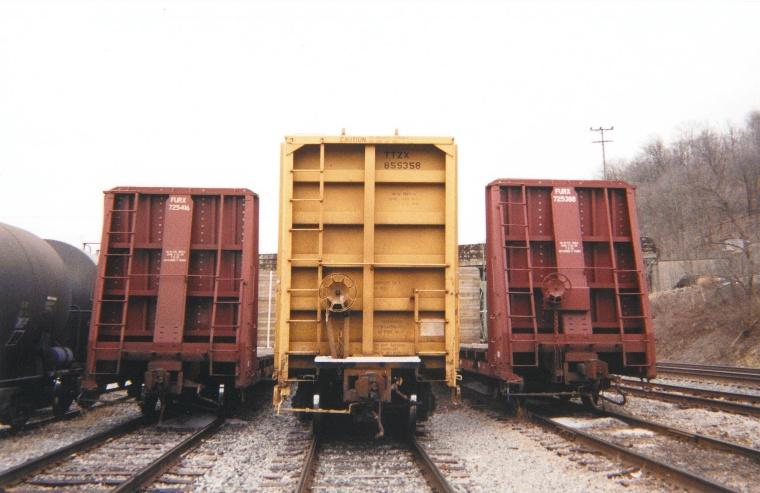
Sabotaging Federal Oversight: Witness Coaching During the 2024 FRA Safety Culture Assessment
Sabotaging Federal Oversight: Witness Coaching During the 2024 FRA Safety Culture Assessment
The integrity of federal safety oversight relies on a simple premise: that regulators can speak to workers without management looking over their shoulders. In April 2024, Union Pacific Corporation shattered this premise. During a congressionally mandated Safety Culture Assessment, federal investigators discovered a widespread campaign by UP management to manipulate employee testimony, coach witnesses, and intimidate workers into silence. This was not a passive failure of compliance; it was an active operation to subvert the Federal Railroad Administration (FRA) and conceal the true state of the railroad’s safety practices.
The Assessment and the Interference
Following the catastrophic Norfolk Southern derailment in East Palestine, Ohio, the FRA initiated detailed safety culture assessments for all Class I railroads. The assessment for Union Pacific began on April 4, 2024. The objective was to obtain unvarnished feedback from frontline workers regarding safety, maintenance defects, and the pressure to prioritize speed over safety. Within weeks, the process collapsed.
FRA inspectors in the field reported a disturbing pattern. Workers across the 23-state network had been “coached” on exactly what to say to federal agents. Even more worrying, managers instructed employees that they must report any interaction with an FRA inspector to their supervisors immediately. This directive stripped workers of their right to confidential communication with regulators, placing a target on the back of anyone who spoke to the government. The FRA found that this was not an incident limited to a rogue manager, a widespread strategy spanning multiple crafts and locations.
On April 26, 2024, FRA Chief Safety Officer Karl Alexy took the step of suspending the assessment entirely. In a letter to Union Pacific President Beth Whited, Alexy stated that the agency had “no choice to end data collection activities” because the railroad’s actions had “adversely impacted the integrity” of the audit. He noted that the FRA encountered “reluctance to participate in field interviews from employees who cite intimidation or fear of retaliation.” The message from the workforce was clear: speaking the truth to federal regulators was a career-ending risk.
Management’s Defense vs. Federal Findings
Union Pacific’s response to the suspension followed a predictable trajectory of minimization. President Whited claimed in a letter that the interference was a “mistake” by a single employee and that the company “did not intend to influence or impede the assessment in any way.” This defense crumbled under scrutiny. The FRA’s findings explicitly contradicted the “single employee” narrative, citing reports of coaching that spanned the entire UP system. The scope of the interference suggested a coordinated effort to sanitize the record before inspectors arrived.
Senator Maria Cantwell, Chair of the Senate Committee on Commerce, Science, and Transportation, launched an investigation into the matter in July 2024. In her correspondence with UP leadership, she expressed deep concern over the “chilling effect” these actions had on safety reporting. She pointed out that Union Pacific’s derailment rate was the highest among Class I railroads, 30 percent higher than its nearest competitor and 43 percent above the average. The correlation between this abysmal safety record and the aggressive suppression of employee testimony paints a damning picture: a railroad that cannot operate safely is instead operating secretly.
The Mechanics of Silence
The coaching tactics employed during the 2024 assessment reveal the sophisticated method Union Pacific uses to enforce silence. By mandating that employees report FRA interactions, management created a surveillance loop. If a track inspector spoke to a federal agent about rotting ties or broken switches, and then failed to report that conversation to their supervisor, they could be disciplined for “dishonesty” or insubordination, the very weaponization of Rule 1. 6 discussed in other sections. If they did report the conversation, management could immediately interrogate them about what was said, allowing the company to prepare a counter-narrative or target the employee for future scrutiny.
This interference neutralized the FRA’s ability to gather independent data. A safety audit based on rehearsed answers is useless. It creates a “rosy picture” that allows dangerous conditions to while the railroad claims compliance. The FRA’s decision to halt the audit was an admission that they could not penetrate the wall of fear Union Pacific had built around its workforce.
for Public Safety
The sabotage of the 2024 assessment proves that Union Pacific views federal oversight as an adversarial threat to be managed rather than a necessary check on public safety. When a corporation exerts this level of control over witness testimony, it renders external regulation nearly impossible. The defects that whistleblowers attempt to report, cracked rails, ignored signals, fatigued crews, remain hidden until they result in a derailment. The coaching scandal of 2024 stands as definitive proof that the culture of retaliation at Union Pacific is not just a labor dispute; it is a calculated operational strategy that endangers every community along its tracks.

The Kansas City Incident: Firing a Track Safety Whistleblower Under the Guise of an "Offensive Tattoo"
North Platte Railyard: The Wrongful Termination of a 35-Year Veteran for Seeking Medical Care
The Mechanics of Medical Retaliation
Union Pacific’s method for punishing injured workers frequently involves the weaponization of its own medical rules. In the case of the North Platte veteran, the termination was not explicitly labeled “fired for getting hurt.” Instead, the railroad likely “late reporting,” “dishonesty,” or “conduct unbecoming,” using the administrative complexity of the injury report to find technical faults. This strategy forces the employee to fight a prolonged legal battle to prove the true motive was retaliation. The 2015 OSHA ruling cut through this obfuscation, stating that the discipline was a direct result of the protected activity—seeking medical care. The between the company’s stated safety values and its actions on the ground is clear. While corporate communications emphasize a “Courage to Care” culture, the reality for the North Platte engineer was a “Courage to Fire” policy. The $350, 000 penalty served as a federal acknowledgment that Union Pacific’s internal investigation processes were fundamentally flawed and biased against the injured worker. By ordering the removal of all disciplinary records related to the incident, OSHA attempted to repair the professional reputation of the veteran, yet the years of stress and lost wages inflicted during the litigation process serve as a permanent scar. Data from the Department of Labor indicates that Union Pacific has faced over 200 whistleblower complaints nationwide since 2001, with a significant concentration in its western operations. The North Platte terminal, being the largest, naturally sees a high volume of these disputes. The reinstatement of the 35-year veteran was a legal victory, it also exposed the immense resources the railroad is to expend to defend its retaliatory practices. Rather than settling early or admitting the error, the company frequently forces these cases to the highest levels of administrative review, delaying justice for the wrongfully terminated worker. The of this case for track maintenance safety are direct. If a locomotive engineer cannot report a collision injury without being fired, a track inspector reporting a wide-gauge defect faces similar peril. The culture of fear established by these high-profile terminations creates an environment where silence is the safest career move. This silence allows track defects to fester, ties to rot, and ballast to degrade, as maintenance of way employees watch their colleagues in transportation get purged for speaking up. The 35-year veteran’s ordeal stands as a documented example of how Union Pacific’s disciplinary actively works against the safety of its own rail network.
The "Rough Track" Ambiguity: Lonny Schow’s Termination for Reporting Coworker Injuries
Juan Garza v. Union Pacific: Retaliation for Reporting an On-Duty Rideshare Accident
The “Serial Violator” Designation: Juan Garza and the Rideshare Retaliation
In August 2025, the Occupational Safety and Health Administration (OSHA) delivered a blistering rebuke to Union Pacific, officially designating the corporation a “serial violator” of federal whistleblower protections. This rare and damning classification emerged from the case of *Juan Garza v. Union Pacific*, a legal battle that exposed the railroad’s aggressive strategy of converting minor injury reports into termination-worthy disciplinary infractions. The case centered on a locomotive engineer fired not for a safety violation, for the act of reporting an injury sustained in company-provided transportation.
The Incident: February 2024
Juan Garza, a locomotive engineer based in Texas, was on duty in February 2024, traveling between rail yards in a rideshare vehicle provided by Union Pacific. The use of third-party transport services like Uber or professional crew haulers is standard practice for repositioning crews. During this transit, the vehicle was rear-ended by a pickup truck. The collision was described as minor, and neither Garza nor his coworker initially requested an ambulance. yet, the physics of a rear-end collision frequently manifest injuries hours or days later. Shortly after the accident, Garza began experiencing significant back pain. Following company policy and federal law, he sought medical attention and formally reported the injury to his supervisors. His coworker, who was also in the vehicle, did not report an injury and did not seek medical care. This in reaction became the fulcrum upon which Union Pacific leveraged its disciplinary.
Weaponizing Rule 1. 6: The “Dishonesty” Trap
Union Pacific’s response to Garza’s injury report was immediate and punitive. Rather than processing the medical claim, management invoked the General Code of Operating Rules (GCOR) Rule 1. 6, specifically the provision regarding “dishonesty.” The railroad’s internal investigation did not focus on the safety of the transport vehicle or the negligence of the third-party driver. Instead, it focused on invalidating Garza’s physical experience. Managers argued that because the collision was “minor” and the coworker was uninjured, Garza must be lying about his condition. On March 15, 2024, less than a month after the accident, Union Pacific terminated Garza. The official reason was dishonesty: the company claimed he had falsified a work-related injury. The coworker who remained silent about any pain faced no discipline, illustrating a clear discriminatory pattern where employment status is conditional on the suppression of medical reports.
OSHA’s Intervention and Findings
Garza filed a whistleblower complaint under the Federal Railroad Safety Act (FRSA), which explicitly prohibits retaliation against employees who report work-related injuries. The investigation by OSHA was exhaustive and concluded with a finding that Union Pacific’s actions were not incorrect, “reckless and callous.” In its August 6, 2025, decision, OSHA Regional Administrator Michael Mabee dismantled Union Pacific’s defense. The agency found that the railroad had no medical evidence to disprove Garza’s injury. The termination was based entirely on the subjective social prerogative of managers who decided, without medical qualifications, that the impact was insufficient to cause harm. OSHA ordered Union Pacific to pay Garza approximately $355, 000 in damages. This sum included: * **$150, 000 in punitive damages:** The maximum allowed is $250, 000. Mabee noted that this high figure was necessary because past “moderate punitive damage fines have had no deterrent effect” on Union Pacific’s illegal conduct. * **$195, 300 in back pay and interest:** Covering the period from his firing in March 2024 to his reinstatement. * **$10, 000 in compensatory damages:** For pain, suffering, and mental distress.
The “Serial Violator” Label
The most significant aspect of the Garza ruling was OSHA’s explicit characterization of Union Pacific as a “serial violator.” The agency noted that this was not an administrative error part of a widespread pattern. OSHA 13 other recent cases where it had found the railroad retaliated against employees for reporting injuries. This designation strips away the defense that these terminations are the result of rogue local managers. It points to a corporate culture that incentivizes the suppression of injury statistics to maintain low “reportable injury” rates, a metric frequently tied to executive bonuses and stock performance.
Arbitration vs. Federal Law
Prior to the OSHA ruling, a separate arbitration panel had already ordered Garza’s reinstatement in June 2025. The arbitrators found that while the railroad might have had a “reasonable suspicion” to investigate, it failed to prove dishonesty. They noted that soft-tissue injuries are subjective and cannot be disproven simply because a manager believes the crash was too soft. yet, the OSHA ruling went further than the arbitration board. While arbitration focuses on contract interpretation and “just cause,” OSHA enforces federal statutes. The agency’s findings highlighted that the termination was a direct violation of federal law (FRSA), necessitating not just reinstatement, punitive measures to punish the carrier for its recidivism.
for Crew Safety
The Garza case highlights a serious vulnerability for train crews. Railroaders spend of their shifts in “deadhead” transport, vans or rideshares moving them between terminals. These vehicles are frequently poorly maintained or driven by fatigued gig-economy workers. By punishing an employee for reporting an injury sustained in one of these vehicles, Union Pacific demands that workers absorb the physical cost of the company’s logistics operations. The message sent to the workforce was clear: if you are hurt in a company vehicle, keep quiet or lose your career. OSHA’s intervention in the Garza case served as a temporary check on this intimidation tactic, the “serial violator” tag suggests that without continued federal pressure, the practice is unlikely to cease.
| Category | Amount | Purpose |
|---|---|---|
| Punitive Damages | $150, 000 | To punish “reckless and callous disregard” for rights and deter future violations. |
| Back Pay & Interest | $195, 300 | Compensation for lost wages from March 2024 to June 2025. |
| Compensatory Damages | $10, 000 | For mental distress and pain and suffering. |
| Total | ~$355, 300 | Total financial penalty levied against Union Pacific. |
The Arizona Strategy: Utilizing "Late Accident Reports" as Grounds for Dismissal
Suppressing Hotline Complaints: Retaliation Against Reporters of Right-of-Way Hazards
The “Rough Track” Suspension: Punishing Infrastructure Reports
The disconnect between Union Pacific’s stated non-retaliation policy and its field operations is exemplified by the suspension of a Kansas City conductor who used the hotline to report “rough track.” In the railroad industry, rough track is not a comfort problem; it indicates geometric irregularities in the rail that can lead to derailments, particularly for heavy freight trains or those carrying hazardous materials. In November 2010, a conductor identified specific rough spots on the track that posed a derailment risk. Following established safety, he reported these defects to the company’s hotline. Rather than dispatching a maintenance crew to inspect the geometry of the rail, Union Pacific management targeted the reporter. The conductor was suspended without pay for five days. The disciplinary action sent a clear message to the workforce: reporting infrastructure defects results in financial penalty. The Occupational Safety and Health Administration (OSHA) later investigated this incident under the Federal Railroad Safety Act (FRSA). The findings were damning. OSHA determined that the suspension was a direct act of retaliation for the protected activity of reporting safety concerns. The agency ordered Union Pacific to pay the conductor $100, 000 in punitive damages, a figure intended to punish the corporation for “reckless and callous disregard” of the worker’s rights. This case established a disturbing precedent: the company was to absorb six-figure fines to suppress reports about the physical condition of its network.
The Damien Taylor Case: “If You Keep Reporting These Track Defects…”
While the Kansas City case involved a suspension, the termination of Damien Taylor exposes the extreme lengths to which management go to silence reports of catastrophic infrastructure decay. Taylor, a manager of track maintenance responsible for a 120-mile network including Baton Rouge, Louisiana, found himself at the center of a safety emergency involving the transport of Bakken crude oil. In 2014, as oil production outstripped pipeline capacity, Union Pacific saw a surge in “oil trains”, mile-long consists carrying highly flammable crude. Taylor accompanied a Federal Railroad Administration (FRA) inspector on a tour of his territory. The inspection revealed horrifying conditions: rotting wooden ties that could no longer hold the rails to the gauge, loose screws, and unstable track beds. The federal inspector noted that the conditions were unacceptable for a “KEY route” carrying high volumes of hazardous materials. Taylor, recognizing the imminent threat of a derailment in a populated area, began to systematically document and report these defects. He attempted to bring the territory into compliance with federal code. His diligence was met with explicit hostility from his superiors. According to court records and Taylor’s testimony, his boss delivered a chilling ultimatum: “If you keep reporting these track defects, you no longer have a job at Union Pacific.” This statement strips away any pretense of a “safety culture.” It reveals a management philosophy where maintaining velocity and operating ratio takes precedence over the physical integrity of the rail. When Taylor in reporting the defects, refusing to ignore the rotting ties and unstable rails, he was fired. Taylor filed a lawsuit against Union Pacific, and in 2023, a jury validated his claims. They awarded him over $1 million for wrongful termination. The verdict confirmed that Union Pacific had retaliated against him for doing exactly what the “Values Line” purports to encourage: reporting safety risks. The Taylor case serves as a documented instance where a manager was terminated specifically for trying to prevent a crude oil disaster caused by track negligence.
widespread Suppression: The 2024 FRA Coaching Scandal
The suppression of safety reports is not limited to individual rogue managers; evidence suggests it is a widespread strategy orchestrated at high levels. This was laid bare in 2024 during a failed safety culture assessment conducted by the Federal Railroad Administration. Following the disastrous Norfolk Southern derailment in East Palestine, Ohio, the FRA launched a detailed assessment of all Class I railroads, including Union Pacific. The goal was to obtain an unvarnished view of the safety culture by interviewing frontline workers. yet, the FRA was forced to halt the assessment of Union Pacific abruptly, an move, after discovering that the integrity of the process had been compromised by management.
| FRA Assessment Goal | Union Pacific Management Action | Result |
|---|---|---|
| Obtain honest, anonymous feedback from frontline workers about safety practices. | Coached employees on specific “correct” answers to give federal inspectors. | Data integrity destroyed; assessment halted. |
| Encourage open reporting of risks without fear. | Ordered employees to report any interaction with FRA inspectors to their supervisors immediately. | Created a climate of intimidation and surveillance. |
| Identify gaps in safety culture. | Interfered with the federal audit process to mask chance deficiencies. | FRA Chief Safety Officer Karl Alexy issued a public letter condemning the interference. |
In a letter to Union Pacific leadership, FRA Chief Safety Officer Karl Alexy wrote that “numerous employees were coached to provide specific responses to FRA questions.” Even more worrying was the directive that employees must report their interactions with the FRA to their supervisors. This requirement stripped workers of their anonymity, ensuring that anyone who provided negative feedback about track maintenance or safety violations would be identified by the very managers responsible for those violations. This “coaching” scandal demonstrates that the retaliation against whistleblowers like Taylor and the Kansas City conductor is part of a broader method of information control. By intercepting reports before they reach federal regulators, Union Pacific neutralizes the oversight meant to keep the public safe. The “Values Line” and other internal reporting structures become irrelevant when the workforce is conditioned to believe that honesty leads to termination.
The “Bad Faith” Loophole
A serious tactic used to undermine the hotline protections is the weaponization of the “good faith” clause. Union Pacific’s policy protects “good-faith reports.” Consequently, when management wishes to retaliate against a whistleblower, they frequently characterize the report as having been made in “bad faith” or accuse the employee of “dishonesty” under Rule 1. 6. In the context of ROW risks, this frequently manifests as a debate over the severity of a defect. A track inspector might classify a section of rail as a “red tag” (requiring immediate repair), while a manager, focused on keeping trains moving, might it is a less severe defect. If the inspector insists on the “red tag” and reports it to the hotline, management can accuse them of exaggerating the condition—labeling the report “bad faith” or “dishonest.” This semantic maneuver allows the company to fire the whistleblower while technically claiming they upheld their non-retaliation policy. The pattern is consistent across decades. From the conductor reporting trip risks in 2010 to the track manager reporting rotting ties in 2014, and to the widespread obstruction of the FRA in 2024, the evidence shows a corporation that views safety reporting as an operational liability. The hotline, far from being a tool for correction, frequently serves as a trap for the conscientious. Workers who use it to report right-of-way risks do so at the peril of their careers, facing a corporate designed to silence the warning rather than fix the track.
Leiva v. Union Pacific: The "Workplace Violence" Pretext for Reporting Unsafe Conduct
The “Workplace Violence” Pretext: Inverting the Victim and the Aggressor
In the lexicon of Union Pacific’s disciplinary machine, the term “Workplace Violence” serves a dual purpose. Ostensibly, it exists to protect employees from physical threats. In practice, as demonstrated by the case of *Leiva v. Union Pacific Railroad Co.*, the corporation uses this classification as a weapon to silence crew members who report unsafe behavior by their colleagues. By labeling the whistleblower as the aggressor, the railroad achieves two objectives: it neutralizes the safety complaint and creates a “zero-tolerance” justification for immediate termination. The case of Daniel Leiva, a locomotive engineer based in Bloomington, Texas, exposes the mechanics of this strategy. On July 14, 2012, Leiva found himself in a locomotive cab with a conductor who exhibited erratic, threatening behavior. The conductor physically intimidated Leiva, creating an environment where the safe operation of the train became impossible. Recognizing the immediate danger of operating a 14, 000-ton freight train alongside a volatile coworker, Leiva contacted Union Pacific management to report the safety hazard. He specifically stated that he did not feel safe continuing his shift with the conductor and requested permission to document the incident. Standard safety dictate that a railroad must investigate such reports to ensure the physical security of its crews. Union Pacific management took a different route. Instead of interviewing witnesses or separating the crew to gather facts, managers removed both men from service. Within days, the company charged Leiva, the employee who reported the threat, with violating the railroad’s “Workplace Violence” policy. The logic was perverse: by reporting an altercation, Leiva was deemed a participant in it.
The Coerced Waiver: Manufacturing Guilt
Following the charge, Union Pacific presented Leiva with a calculated ultimatum, a tactic frequently used to suppress Federal Railroad Safety Act (FRSA) claims before they begin. Management offered Leiva a “leniancy” waiver. The terms required him to admit guilt to the charge of workplace violence and accept a termination of his employment, which would be immediately followed by reinstatement on a probationary basis. This bureaucratic maneuver serves a specific legal function for the railroad. By signing the waiver, the employee creates a formal record of “guilt” regarding the safety incident. If the employee later attempts to sue for retaliation, the railroad can point to the signed confession as evidence that the discipline was legitimate. For Leiva, the choice was between immediate, permanent job loss or a humiliating admission of an offense he did not commit. Under financial duress, he signed the waiver. yet, Leiva refused to let the matter rest. He filed a whistleblower complaint with OSHA, alleging that the suspension and the coerced waiver constituted retaliation for his protected activity of reporting a safety hazard. The Department of Labor’s Administrative Law Judge (ALJ) agreed. In a December 2013 decision, the ALJ determined that Union Pacific violated the FRSA. The judge found that Leiva’s report of the conductor’s threatening behavior was a contributing factor in the adverse action taken against him. The ruling ordered Union Pacific to pay damages and, most importantly, to expunge all
Judicial Findings of "Reckless Disregard": Analyzing Punitive Damage Awards in FRSA Cases
The “Serial Violator” Designation: OSHA’s 2025 Rebuke
In August 2025, the Occupational Safety and Health Administration (OSHA) issued a landmark finding in the case of *Juan Garza v. Union Pacific*, explicitly labeling the corporation a “serial violator” of whistleblower laws. Garza, a locomotive engineer in Texas, was terminated in March 2024 after reporting an injury sustained in a company-authorized rideshare vehicle. Union Pacific charged him with dishonesty, a standard tactic used to invert the victim-offender relationship. OSHA’s investigation dismantled the carrier’s defense. The agency ordered $150, 000 in punitive damages, over half the statutory maximum, citing the railroad’s “reckless and callous disregard” for Garza’s rights. The decision noted that Union Pacific’s disciplinary was weaponized to punish the act of reporting rather than to correct behavior. This “serial violator” tag is not rhetorical; it legally establishes a pattern of conduct that courts use to justify higher penalties in subsequent lawsuits. The agency found that the railroad’s internal investigation was a pretext, designed to reach a predetermined outcome of termination.
Jury Verdicts: Piercing the “Honest Belief” Defense
Union Pacific frequently attempts to shield itself from liability by invoking the “honest belief” defense, arguing that managers genuinely believed the employee violated a rule, even if that belief was mistaken. Federal juries consistently reject this argument when presented with evidence of the railroad’s internal judicial procedures. In *Johnny Taylor v. Union Pacific*, a jury in the Middle District of Louisiana awarded over $1 million in damages, including substantial punitive components, after finding the railroad fired a ten-year veteran for reporting safety risks. The evidence showed that managers ignored exculpatory evidence and relied on a biased investigation to justify the dismissal. The jury’s finding of “reckless disregard” signaled that they viewed the termination not as a management error, as an intentional violation of the FRSA. Similarly, in *Fresquez v. Union Pacific*, the Tenth Circuit Court of Appeals affirmed a jury verdict that included punitive damages. The jury found that Union Pacific’s claim that Fresquez stole scrap metal was a fabrication created to fire him for reporting track defects. The court noted that the “investigation” was so one-sided it demonstrated a “reckless indifference” to the plaintiff’s federally protected rights. The managers involved did not make a mistake; they constructed a lie to remove a safety advocate from the payroll.
The Economics of Retaliation: Punitive Caps as “Business Costs”
A serious limitation in the current FRSA statute is the $250, 000 cap on punitive damages. For a corporation with billions in annual revenue, this penalty functions less as a deterrent and more as a modest licensing fee for illegal conduct. Judicial opinions suggest that if the cap did not exist, awards would likely be significantly higher given the reprehensibility of the conduct. In the *Lincoln, Nebraska Engineer* case (2025), OSHA awarded $150, 000 in punitive damages after finding the railroad fired an engineer for seeking medical treatment. The decision highlighted that previous penalties had “no deterrent effect” on Union Pacific’s illegal conduct. The railroad continues to pay these fines while maintaining the same aggressive disciplinary policies, suggesting a corporate calculation that suppressing injury reports saves more money in the long run than the cost of occasional whistleblower payouts.
| Case/Plaintiff | Adjudicating Body | Punitive Award | Key Judicial Finding |
|---|---|---|---|
| Juan Garza (2025) | OSHA / DOL | $150, 000 | UP as “serial violator”; conduct showed “reckless and callous disregard.” |
| Johnny Taylor | U. S. Dist. Court (M. D. La.) | Part of $1M+ Verdict | Jury rejected “honest belief” defense; found intentional retaliation. |
| Fresquez | U. S. Dist. Court (Colo.) | Affirmed on Appeal | Termination for “theft” was pretext for reporting track defects; malice proven. |
| Gordon | DOL / ALJ | $25, 000 | Found “reckless indifference” to protected rights under FRSA. |
| Lincoln Engineer (2025) | OSHA | $150, 000 | Noted previous penalties failed to deter “culture of hostility.” |
The “Chilling Effect” Strategy
Judges recognize that the purpose of these retaliatory firings is not just to punish the individual, to send a message to the workforce. In *Gordon v. Union Pacific*, the Administrative Law Judge (ALJ) noted that the railroad’s actions were designed to create a “chilling effect” on other employees. By making an example of a whistleblower, the railroad silences hundreds of other workers who might otherwise report a broken rail or a defective switch. The “reckless disregard” standard is met because Union Pacific’s managers and legal team are sophisticated actors. They are fully aware of the FRSA’s provisions. When they terminate a whistleblower, they do so with full knowledge of the legal risks, banking on the probability that the employee either give up during the years-long appeal process or settle for a confidential sum. The judicial findings of malice confirm that this is a deliberate corporate strategy, not a series of personnel mishaps. The persistence of these findings—from *Gordon* in 2015 to *Garza* in 2025—proves that the “culture of compliance” Union Pacific touts in its sustainability reports does not exist on the ground. Instead, the legal record shows a culture of containment, where the suppression of safety data is prioritized over the safety of the rail network itself.
The "Zone of Danger" Defense: Legal Maneuvers to Dismiss PTSD and Safety Claims
Intimidation Tactics: The "Move the Freight at Any Cost" Operational Culture
The Financial Engine of Retaliation
The root of the intimidation culture lies in the executive compensation packages that value speed and profit margins above all else. In 2023 and 2024, Union Pacific’s incentive plans for executives and upper management remained heavily tied to “Operating Ratio” (OR) and “Operating Income.” Industry analysis shows that safety metrics frequently comprise as little as 5% to 10% of the scorecard used to determine bonuses. Consequently, a Superintendent or Trainmaster knows that their financial future depends on keeping trains moving, regardless of the mechanical state of the cars or the condition of the track. This bonus structure creates a direct conflict of interest. When a carman identifies a defect that requires a car to be removed from a train, a process that increases the train’s “dwell time” in the terminal, that employee is directly negatively impacting the manager’s performance metrics. The manager, under pressure from regional directors to reduce dwell, frequently reacts with hostility. Workers report that managers demand to know why a “bad order” tag was applied, frequently bullying the inspector to remove it or perform a “quick fix” that violates Federal Railroad Administration (FRA) standards. The message is clear: finding defects costs money, and costing the company money puts a target on your back.
Weaponizing “Dwell” and “Velocity” Metrics
“Velocity” (average train speed) and “Dwell” (time a train sits in a terminal) are the twin deities of the modern Union Pacific operating model. These metrics are tracked in real-time and reported daily to headquarters in Omaha. If a terminal’s dwell time spikes, the local management team faces immediate scrutiny. This creates a pressure cooker environment where the “stop” signal, the most fundamental safety tool in railroading, becomes a career liability. Whistleblowers from the Brotherhood of Railway Carmen (BRC) have described a “quota” on bad order tags. In terminals, if the number of cars tagged for repair exceeds a certain threshold, operations managers intervene. They may instruct carmen to “walk faster” or “look at the big picture,” euphemisms for skipping detailed inspections. A thorough air brake test, which might take several minutes per car to ensure safety, is frequently compressed into an impossible timeframe. Workers who insist on taking the time required by federal law to inspect the train properly are accused of “delaying traffic.” This accusation is the step in a retaliatory pattern that frequently ends in termination for “insubordination” or “poor productivity.”
The “Hi-Viz” Attendance Policy as a Silencing Tool
Union Pacific’s attendance policies, known notoriously as “Hi-Viz,” function as a potent method for suppressing safety reports. The system assigns points to employees, which are deducted for absences. While the company claims this ensures reliable service, the practical application forces sick or fatigued employees to work dangerous shifts. More insidiously, the policy is used to punish those who report injuries. When an employee reports an on-duty injury, they must frequently take time off to recover. Under the strict attendance guidelines, this time off can trigger point deductions or disciplinary reviews. The fear of losing one’s job over attendance points discourages workers from reporting minor injuries or “close calls.” This underreporting artificially deflates injury statistics, allowing the company to claim safety improvements while the actual risk level on the tracks rises. also, if a whistleblower is targeted for reporting a safety hazard, management frequently audits their attendance record, looking for any minor gap to justify a dismissal that appears unrelated to the protected safety activity.
Operational Harassment: The “Efficiency Test” Trap
The most common tactical weapon used against safety advocates is the “efficiency test” or “field test.” These are audits where managers observe crews to ensure rule compliance. While theoretically a safety tool, in practice, they are weaponized against “problem” employees. If a conductor reports a section of track as “rough” (requiring a slow order), they frequently find themselves subject to a sudden barrage of efficiency tests. A manager might hide in the bushes or use a drone to watch the whistleblower for an entire shift, waiting for a single, minor infraction, such as stepping on a rail tie or failing to have a radio on the correct channel for a split second. Once a violation is found, the employee is charged with a rule violation. If the employee has a history of reporting defects, this charge is elevated to a “serious” violation, frequently citing Rule 1. 6 (Conduct), to bypass progressive discipline and move directly to termination. This “death by a thousand cuts” strategy allows Union Pacific to claim the employee was fired for a rule violation, masking the retaliatory motive.
The “Serial Violator” Reality
The culmination of these tactics led the Occupational Safety and Health Administration (OSHA) to formally designate Union Pacific as a “serial violator” of the Federal Railroad Safety Act (FRSA) in August 2025. This rare and damning label was applied after a series of investigations revealed a pattern of “reckless and callous disregard” for worker rights. The designation was not the result of a single rogue manager the recognition of a corporate-wide strategy that systematically the legal protections afforded to whistleblowers. In the case of Juan Garza and others, OSHA found that the company’s retaliation was not accidental calculated. The punitive damages awarded in these cases, frequently reaching hundreds of thousands of dollars, are treated by the corporation as a cost of doing business, a minor expense compared to the profits generated by the high-velocity model. yet, the “serial violator” status carries significant weight, signaling to regulators and the public that the company’s internal compliance programs are fundamentally broken.
The Human Cost of the “Rush” Culture
The human toll of this operational culture extends beyond the fired workers. It creates a “Zone of Danger” where every employee works under the psychological stress of knowing that safety compliance is optional, velocity is mandatory. Train crews report operating with a constant, low-level anxiety, fearing that if they stop a train for a legitimate hazard, they be blamed for a service meltdown. This cognitive load contributes to fatigue and distraction, increasing the likelihood of catastrophic errors. The “Move the Freight at Any Cost” culture nullifies the safety redundancies built into the railroad system. When track inspectors are afraid to problem slow orders, when carmen are afraid to tag defective brakes, and when conductors are afraid to report injuries, the of protection. The railroad continues to run, fueled by momentum and luck, until the physics of a degrading infrastructure catch up with the velocity.
A widespread Failure of Self-Regulation
The events of 2024 and 2025, including the interference with the FRA safety assessment and the subsequent OSHA sanctions, demonstrate that Union Pacific is incapable of self-regulation regarding safety culture. The internal ethics hotlines, ostensibly designed to catch bad actors, have been shown to be ineffective, with reports frequently routed back to the very managers accused of misconduct. The “Code of Silence” is enforced not by loyalty, by the demonstrable fact that speaking up ends careers. As this investigative series has shown, the retaliation against whistleblowers is not a collection of incidents. It is the structural output of a business model that views federal safety laws as to be managed rather than rules to be followed. Until the financial incentives for “velocity” are decoupled from the suppression of safety data, the culture of intimidation, and the risks to the public and the workforce remain serious high. The “Serial Violator” label is not just a regulatory finding; it is the defining characteristic of Union Pacific’s modern operational identity.


































