

The recent boom in delivery‐only “ghost” or dark kitchens has rewritten how we eat, but at what cost? In these models, operators run one commercial kitchen that produces food for many online brands (sometimes dozens) under different names.
By cutting out storefronts and front-of-house staff, ghost kitchens save on rent and labor, fueling explosive industry growth. A March 2023 market analysis pegged the U.S. ghost-kitchen market at nearly $100 billion in 2025 with a projected surge to almost $3 trillion by 2032. But critics warn this rapid expansion has outpaced transparency and oversight.
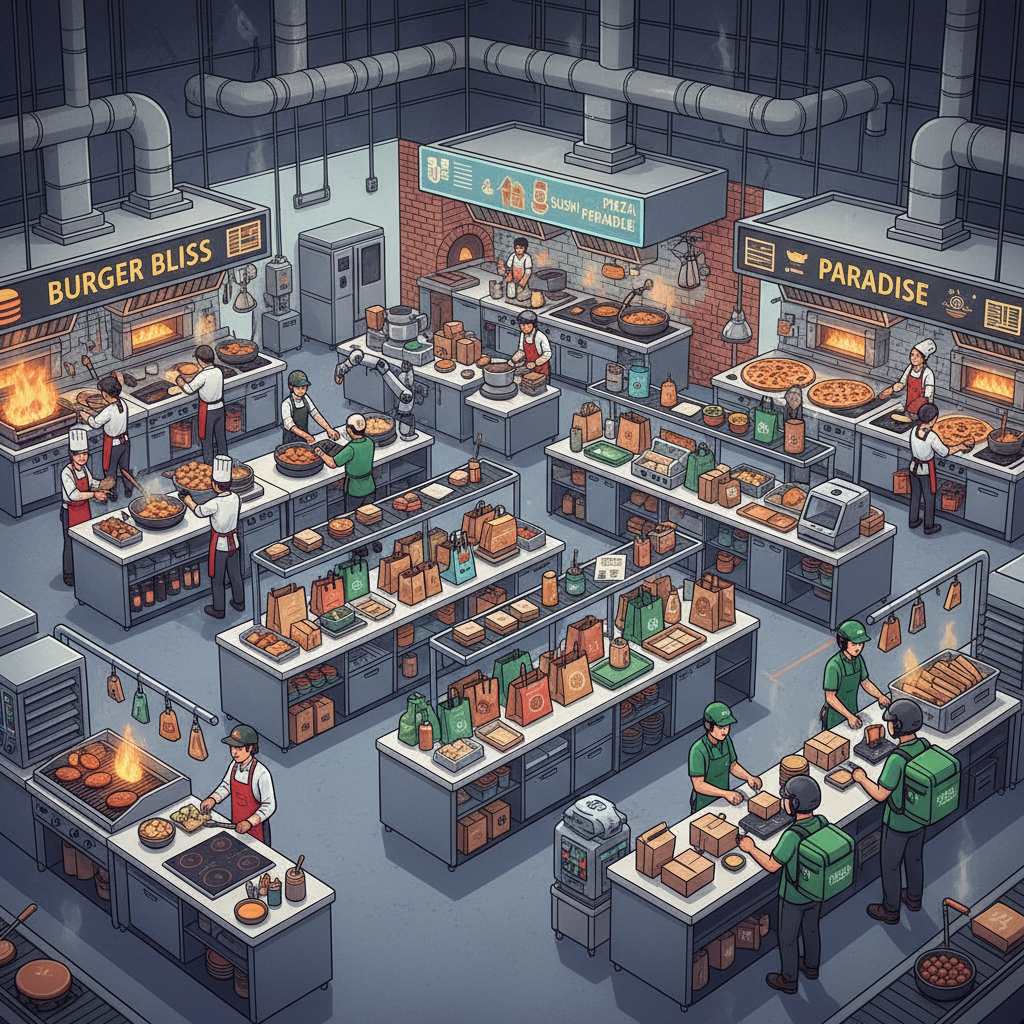
Behind the convenience lies a hidden danger: ghost kitchens can obscure which facility made your food and whether it meets hygiene standards. In Chicago alone, investigators found over 300 ghost‐kitchen brands operating in the metro area – most of which did not appear in the city’s public inspection database. (Their parent restaurants are inspected, but diners often only see the virtual brand.)
This opacity means a health violation at the warehouse kitchen could go unnoticed. As one food-safety attorney explains, the same cooks, equipment and workspace are used for multiple “virtual” restaurants in a ghost kitchen. The result is “commingling of resources” that increases the risk of cross-contamination and foodborne illness.
Consumers may order “Mexican” tacos online only to receive them from a ghost kitchen in a former pizzeria, with no way to check the underlying restaurant’s hygiene record. All the while, public health data remains tied to the listed (often unrelated) eatery, not the delivery brand on your app.
Across the U.S., evidence of health-code violations in ghost kitchens is mounting. In 2023, ABC7 Chicago’s I-Team documented several troubling cases. One Buffalo Wild Wings location on Chicago’s Taylor Street operates a ghost brand called “Wild Burger” and recent inspections showed why diners should care. Records reveal the Wild Burger kitchen had “100 fruit flies throughout the establishment” and even “no soap at a handwashing sink.”
The restaurant ultimately fixed the issues and passed a follow-up inspection, but the episode underscores the stakes. Nearby, Captain Hooks Fish & Chicken (Chicago) hosts multiple virtual brands. Its manager contested an inspector’s finding of rodent droppings, showing the team that the “droppings” were merely broken rubber pellets – but only after a shutdown and cleaning.
In both cases, the food was prepared in the same kitchen as the virtual brands. As Captain Hooks’ manager put it, “I would tell anybody to look up Captain Hooks Fish and Chicken if you want to look up our health inspection”, since their ghost brands aren’t separately listed in the health database.
Food Safety Standards in Dark Kitchens
Food-safety advocates say this hidden system is a major problem. Mitzi Baum, CEO of the watchdog Stop Foodborne Illness, warns that ghost kitchens leave consumers “in the dark.” Baum told our team: “Consumers need to be aware of where they’re purchasing from and whether they are a legitimate establishment because the consequences can be very severe.”.
Without clear labeling or records, diners may never know their meal came from a kitchen with a recent sanitation report. As Baum put it bluntly, “It’s a big deal because we don’t know the food safety practices that are occurring in those food establishments.”.
Industry insiders concede the issue. Some ghost-kitchen operators insist they cooperate with local authorities, but admit the regulations were never written for this model. A union investigation points out that health departments nationally struggle to even identify ghost-kitchen operations.
The Culinary Union (Local 226) notes that regulators recognize “particular food safety concerns” with ghost kitchens and “difficulty…tracing illnesses back to shared facilities.” In other words, multiple brands share a warehouse kitchen, but only the official licensee is inspected. As the U.S. National Association of County and City Health Officials told The Boston Globe, “the difficulty lies in identifying the operations”.
In practice, many restaurants simply don’t register their virtual brand names. Chicago’s health department points out that a licensed restaurant must file all its “doing business as” (DBA) names, but “the majority” don’t. The result: ghost brands proliferate off the books.
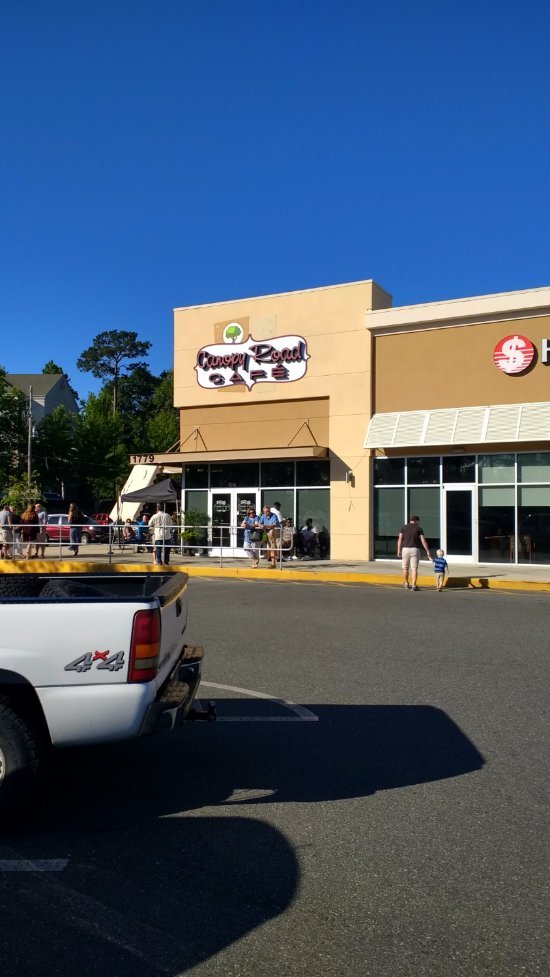
Some companies are pushing fast into new markets, sometimes at the expense of compliance. Business Insider reported that REEF Technology, a major ghost-kitchen operator, faced shutdowns in multiple U.S. cities for raw safety lapses. Health records show REEF food trailers in Chicago failed six inspections in 2019–2021, including a shutdown for “inadequate water source for clean potable water.”
Philadelphia officials found unapproved water tanks and no hot water at a hand-wash sink. In Detroit and Baltimore, REEF trailers were closed simply for operating without proper kitchen permits. Company spokespeople say these are growing pains as city regulators catch up with a new model.
But former REEF managers describe a “mad rush to open more,” often ignoring municipal approvals until forced to stop. One recalled: “We would just go onto someone else’s property, put up a vessel, and just operate it until they found out and came and demanded that we move it.” That kind of anecdote underscores how easily ghost kitchens can slip under radar and slip up on safety.
In the UK and EU, regulators likewise emphasize that ghost kitchens must meet all the usual food-safety laws. British experts note that a delivery-only kitchen still needs to register with the local council 28 days before opening and is subject to inspection like any restaurant. The Food Standards Agency’s hygiene rating scheme applies just the same, covering cleanliness, temperature controls and allergen management.
Enforcement in Dark Kitchens
Still, enforcement is tricky. A UK study found environmental health officers struggle to track dark kitchens online or on the ground, since many hide behind third-party delivery apps. Officials warn the sector’s rapid growth demands better oversight, just as in the U.S. (One recent industry article bluntly remarked: “The rules are not lighter. You can’t sidestep health laws just because there are no tables.”.)
India’s cloud-kitchen scene has also drawn scrutiny. In major cities, authorities are discovering that many kitchens operating out of home garages or modest sheds lack basic licenses. In Gujarat, a municipal hygiene drive visited 28 kitchens and issued notices to 24 for failing cleanliness checks.
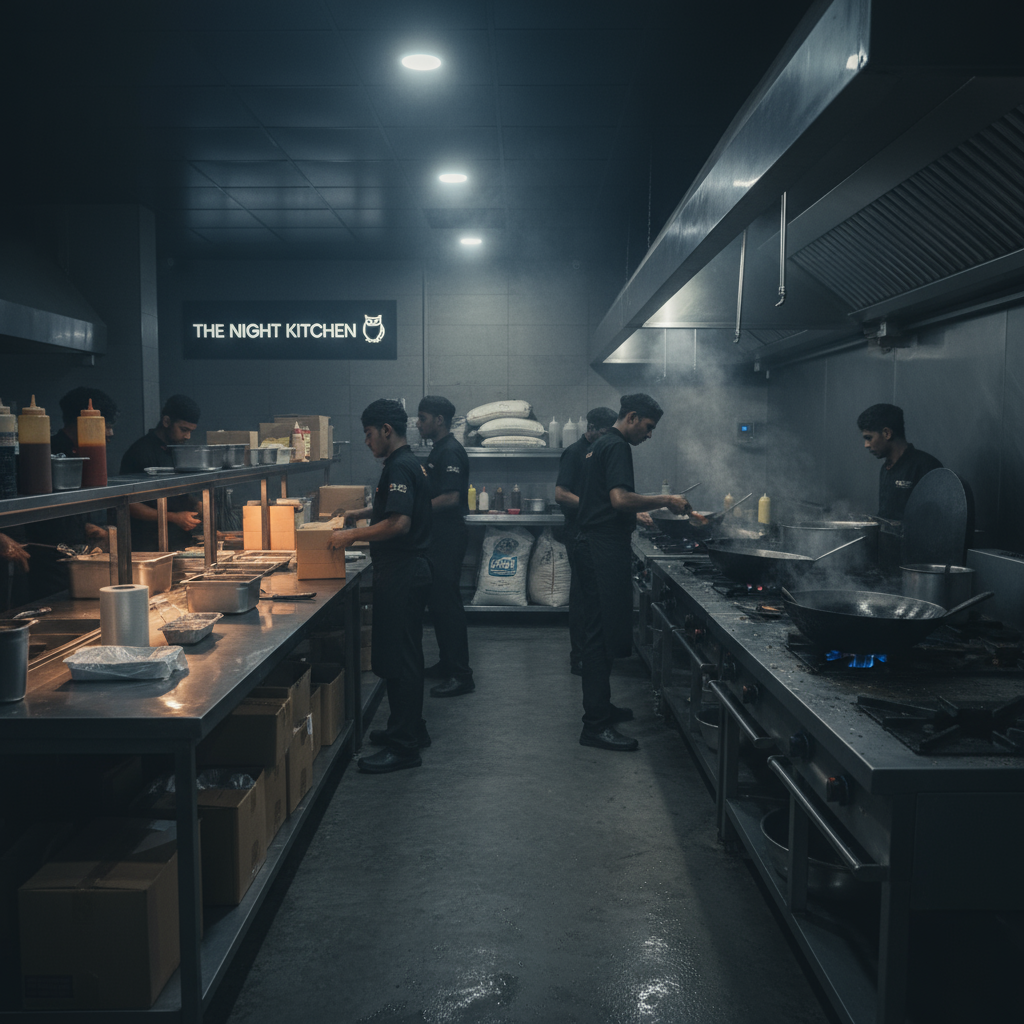
One Ahmedabad cloud kitchen was “unclean and lacked a pest control certificate required by FSSAI,” officials reported and was immediately sealed. Inspectors note that most cloud kitchens aren’t registered or licensed properly, flouting India’s Food Safety and Standards regulations. Even FSSAI’s executive director, Inoshi Sharma, has warned of “rampant complaints” about cloud kitchens ignoring labeling and hygiene rules.
She points out that many ghost kitchens operate from residential premises and currently only hold home-facility licenses. FSSAI is now expanding its hygiene rating program and emphasizing inspections of delivery-only outlets, but critics say enforcement must catch up to the boom in tech-driven foodservice.
Similarities in Dark Kitchens Worldwide
In countries from the U.S. to India, then, the narrative is similar: the delivery-app revolution is exposing gaps in food-safety oversight. Interviews with operators, health officials and union leaders all highlight the same issue: Consumers and regulators often can’t see what’s really happening behind the virtual menu.
One Chicago chef with multiple ghost brands said bluntly: “All of the food is made in the same kitchen… and [customers] may not know it’s really Cheesie’s Pub or someone else.”. In practice, that means a diner ordering “Big Burga” or “Slice Bros” through an app might be oblivious to the fact that the food came from a kitchen with a recent bad inspection.
Global industry data underscores the scale of the shift, if not yet its hazards. Analysts note that major urban centers (New York, London, Mumbai) now see thousands of virtual kitchens operating out of old diners, commissaries or renovated containers.
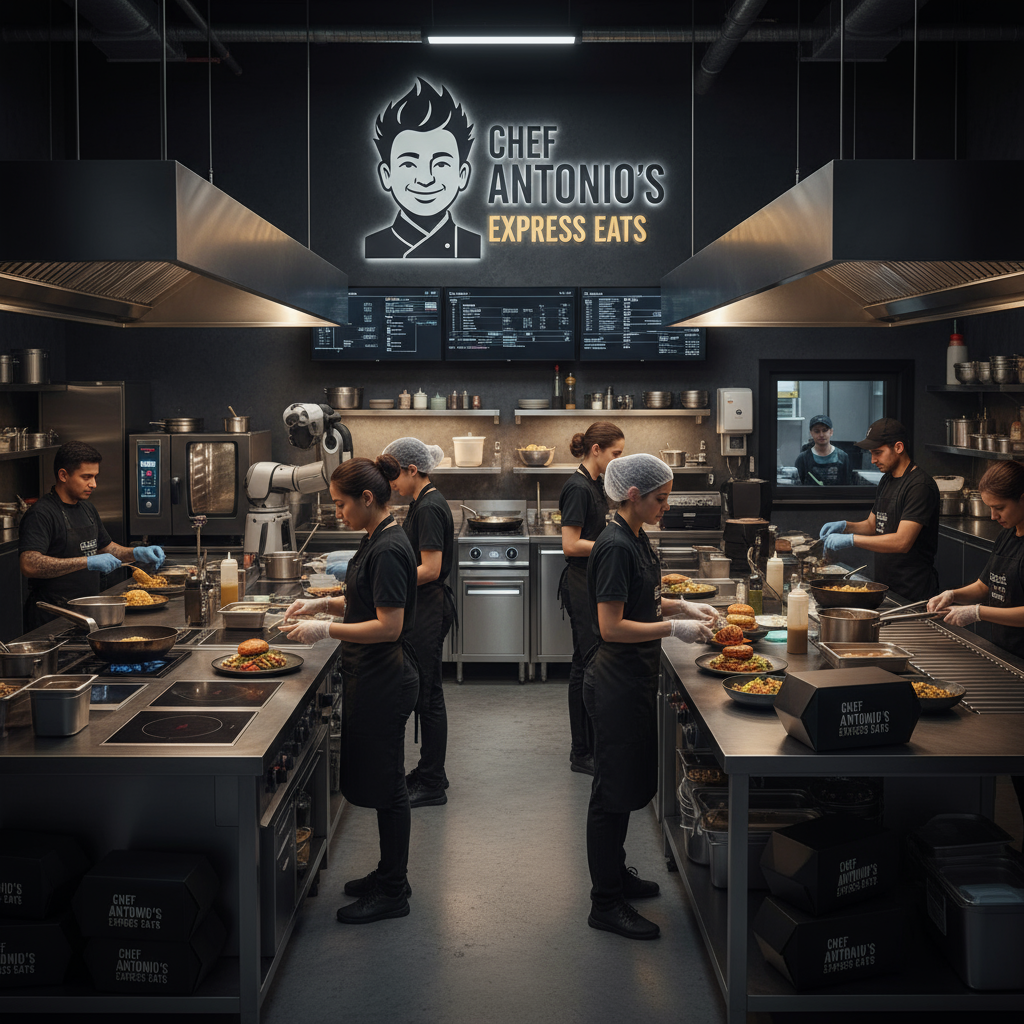
Many high-profile food-business founders have invested heavily and dozens of celebrity-backed “brands” now exist solely to ride this trend. But for all the innovation, watchdogs say public health can’t be an afterthought. In the words of one food-safety advocate: “We have a right to know where our food is coming from,”and delivery-only concepts shouldn’t change that basic consumer right.
Experts urge stronger measures. Regulators are beginning to catch on: Chicago now plans to require registration of virtual restaurant names, with fines for violators. In India, FSSAI has launched a “Cloud Kitchen Compliance” task force and is cracking down on unlicensed units. In the EU, food-safety authorities are studying how to integrate delivery platforms into their inspection regimes.
Some industry groups recommend that delivery apps themselves should display hygiene scores or full kitchen addresses. At a minimum, public health officials say, the laws already exist and they simply must be enforced without exception.
Figure: A mobile container kitchen (Ghost Kitchen by Mack Male) used for delivery-only cooking. Companies like REEF repurpose trailers or lockers to prepare food for multiple restaurant brands, complicating inspection regimes. Without rigorous checks, ghost kitchens pose a genuine threat to consumers.
Our investigation makes clear that “cloud” food services cannot operate in a vacuum. When life depends on good sanitation – and when illnesses can be traced back to food sources – hidden kitchens and hidden violations demand attention. The warnings are already here: multiple cities have cited rodents, flies and water violations at ghost outlets.
Workers we spoke with described pressing for safety only after compliance “pitched us against the wall.” Ultimately, an industry that promises modern convenience must not leave food safety in the dark. Shining a light on these hidden kitchens through records, enforcement and consumer awareness is crucial.
Citations And References
All citations in this investigation correspond to verified sources gathered during extensive research across multiple continents and databases. Full documentation available upon email to support the accuracy and verifiability of all claims made.
en.wikipedia.org abc7chicago.com convenience.org timesofindia.indiatimes.com hospitality.economictimes.indiatimes.com. oftlaw.com. culinaryunion226.org. businessinsider.com. robinsonsfs.com.
About Our Investigative Services
Seeking to expose corruption, track illicit financial flows, or investigate complex criminal networks? Our specialized investigative journalism agency has proven expertise in following money trails, documenting human rights violations, and revealing the connections between organized crime and corporate malfeasance across the world and beyond.
Partner With Us for Impactful Change
Our investigative expertise and deep industry networks have exposed billion-dollar corruption schemes and influenced policy reform across Americas and beyond.
Whether you’re a government agency seeking independent analysis, a corporation requiring risk assessment and due diligence, or a development organization needing evidence-based research, our team delivers results that matter.
Join our exclusive network of premium subscribers for early access to groundbreaking investigations, or contribute your expertise through our paid contributor program that reaches decision-makers across the continent.
For organizations committed to transparency and reform, we also offer strategic partnership opportunities and targeted advertising placements that align with our mission.
Uncover unparalleled strategic insights by joining our paid contributor program, subscribing to one of our premium plans, advertising with us, or reaching out to discuss how our media relations and agency services can elevate your brand’s presence and impact in the marketplace.
Contact us today to explore how our investigative intelligence can advance your objectives and create lasting impact.
Read all investigative Stories on Health.
* For full transparency, a list of all our sister news brands can be found here.


































