

China dominates the global supply of rare earth elements i.e critical minerals used in every smartphone, laptop, and electric vehicle but a growing body of evidence suggests a dark side to this dominance. In remote mines across Inner Mongolia and Xinjiang, reports indicate that Uyghurs and other ethnic minorities are being coerced into mine work under state programs.
At the same time, communities near these mines face rampant pollution. This investigation about forced labor in Chinese rare earth mining traces the human and environmental toll of China’s rare earth rush, examines links to Western tech brands, and compares the situation to labor abuses in other countries.
Key Findings
Major Chinese mining companies in Xinjiang and Inner Mongolia have been tied to “state-imposed” labor transfer programs, as documented by human rights groups.
Journalists and NGOs report that Uyghur workers appear in factories far from Xinjiang, making parts for companies like Tesla and Samsung.
Experts warn that China’s re-education camps and “poverty alleviation” projects serve as forced labor systems.
In Inner Mongolia, citizens report water and soil poisoned by mining waste.
In other critical mineral sectors, such as Congo’s cobalt mines, investigators have similarly found widespread forced labor and child labor.
Rising Demand, Toxic Mines
Rare earth elements is a group of 17 metals including neodymium and dysprosium which are essential for modern electronics, magnets, and green technologies. China mines over 70% of the world’s supply, with huge open-pit operations like Bayan Obo in Inner Mongolia and smaller sites in Xinjiang and other provinces. These mines are notoriously dirty. For example, experts report that the Bayan Obo and Ganzhou mining complexes have “severe contamination from toxic mining waste,” including radioactive thorium and heavy metals.
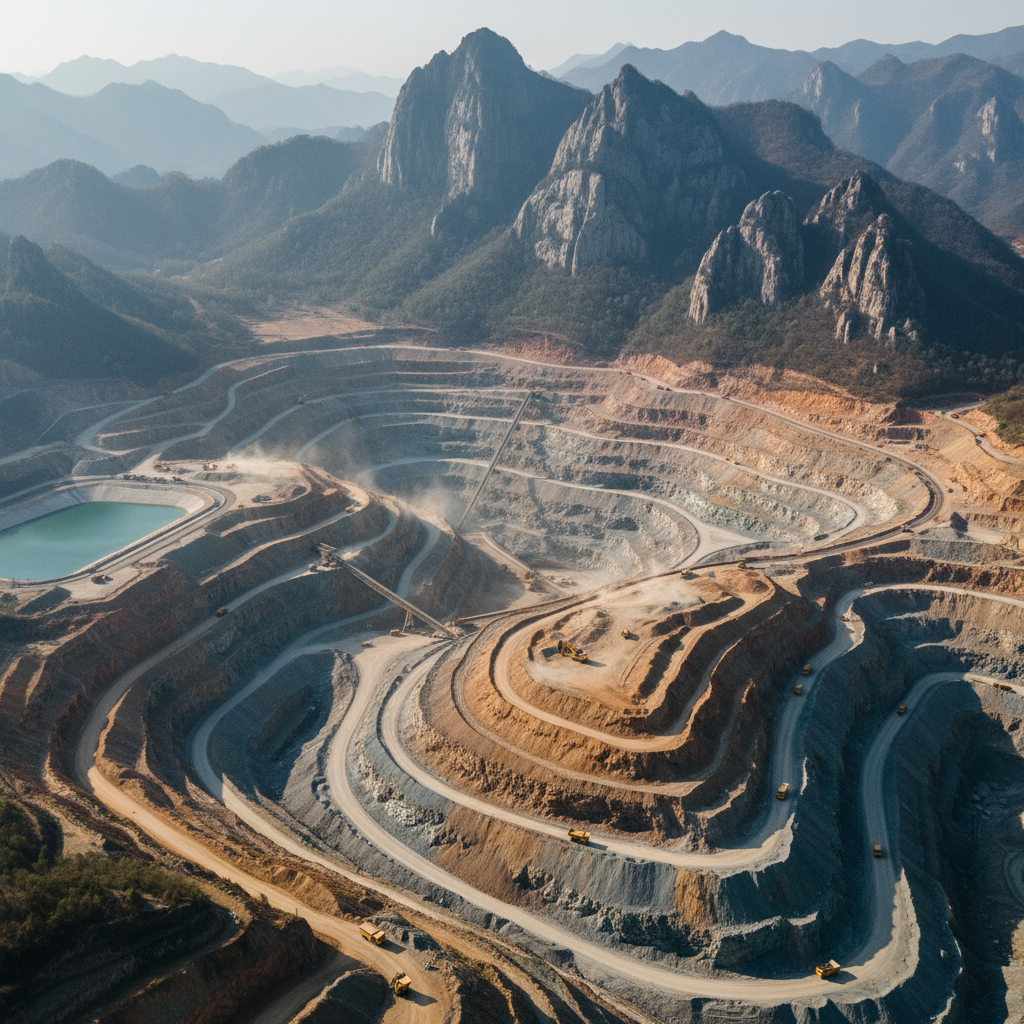
Local farmers around Inner Mongolia mines report polluted water and poisoned soil from rare earth extraction.
In Inner Mongolia, villagers say mine tailings have turned farmland into wasteland. One farmer, Huang Xiaocong, lamented that “ordinary people don’t have the answers” and feel utterly powerless. “Farmers like us… we’re vulnerable ones,” he said. “After the mines come, we can’t farm on our land, it’s just tragic”. Residents report water supplies laced with fluoride and arsenic, byproducts of refining rare earth ores in turn leading to health problems and livestock deaths.
Despite national laws, enforcement is weak: state-owned mining companies often escape cleanup costs, and villagers have “little recourse” when their wells run dry or crops fail.
Even beyond Inner Mongolia, Xinjiang’s mines raise concerns. Although Xinjiang is known for coal and cotton, it also holds rare earth deposits. U.S. experts note that “the XUAR is also an important source of rare earth metals used in consumer electronics and aviation,” making it likely that Xinjiang’s forced labor practices could taint these supply chains. In short, technology’s critical minerals are being extracted amid an environmental and human-health crisis.
State Labor Programs and Forced Labor
Reports and expert analysis reveal that labor in Xinjiang is increasingly coerced. Since 2016, China has detained over a million Uyghurs and other Muslim minorities in “re-education” camps and transferred many to factory jobs. The U.S. Department of Labor and others warn that Xinjiang’s official programs are nominally for poverty alleviation or vocational training but operate as forced labor systems.
“Different forms of state-imposed forced labor” are documented: prisoners made to work in factories, the notorious “Vocational Skills Education and Training Centers” (re-education camps) where detainees sew clothing, and a massive “poverty alleviation through labor transfer” program that moves rural minorities into new jobs.
In practice, Xinjiang authorities have been relocating millions of people. As one official report noted, these labor transfers occurred 3 million times in 2022 alone, making them Xinjiang’s primary coercive labor system. Workers sent through this program are typically housed in guarded dormitories, unable to leave at will, and under constant surveillance.
A human-rights expert explains:
“When a government official knocks on the door of a Uyghur person and says they should take a job far from home, the person knows this is not merely a request because refusal is punishable by detention. This is not a choice. This is not consent.”
These state policies coincide with economic development plans. Provinces are “paired” with Xinjiang regions: factories are built in Xinjiang with companies from richer provinces, and in return, workers from Xinjiang are sent to mainland factories owned by those companies.
One shadowy executor of this system is the Xinjiang Production and Construction Corps (XPCC), a quasi-military conglomerate that owns mines, factories, and farms across Xinjiang. The XPCC openly advertises jobs to minorities under this campaign, calling it “poverty alleviation” while requiring ideological re-education and Mandarin language lessons alongside work.
For example, Chinese state media praised a former detainee who became a miner for Xinjiang Energy Group, showing how labor transfers are spun as success stories. On the ground, however, reports say Xinjiang coal mines and metal smelters have repeatedly received transferred Uyghur workers in 2017–2023. In short, even if a mine is in Xinjiang or elsewhere, major Chinese mining firms are documented participants in these transfer programs.

Xinjiang’s mines and smelters run on cheap coal which is often produced by forced labor and export metals across China.
The result is that raw materials and intermediate products – aluminum, coal, rare earths – get exported out of Xinjiang and blended in with national production. Global companies may unwittingly buy these tainted inputs. For instance, most aluminum smelted in Xinjiang is shipped as “unalloyed ingots” to other provinces, where it is recycled into parts for cars and electronics. Such trading obscures the origin: once aluminum is melted into wheels or foil, no label tells buyers it started in Xinjiang. Analysts warn the same could apply to rare earth products if similar supply chains exist.
Interviews and Testimonies
While independent access to Xinjiang is closed, some Uyghur workers have secretly documented their lives. In one short video, a young Uyghur man in a factory assembling car parts looks at the camera and posts a photo of his work uniform with the comment: “Everyone’s slave is his own master.” The factory was later identified as a Tesla supplier.
In another clip, Uyghur workers in an electronics plant far outside Xinjiang make laptop parts for Samsung. These firsthand glimpses often combined with Chinese government job postings confirm that ordinary Uyghurs have been sent 2,500 miles to work in distant factories, often far from their homes or any support networks.
Human rights monitors collected over 75 such videos from social media, geolocating them to identify dozens of factories across China using Xinjiang minority labor. The Bureau of Investigative Journalism summary notes: more than 100 global brands (from Apple to Nike, from Skechers to KFC) are linked to these factories.
Former government officials confirm that refusing a transfer can mean detention. One legal expert explains, “Local police officers from the XUAR escort Uyghur workers in these factories, and they guard the dormitories. The workers often have their ID confiscated. They have no real freedom”.
In public statements, China calls these measures voluntary “job programs” for poverty reduction. But former detainees and outsiders call them forced labor. A U.S. State Department memo and NGOs call it a campaign of “genocide, crimes against humanity, and state-imposed forced labor”.
For example, hundreds of U.S. legislators have imposed sanctions on companies using Xinjiang labor. The U.S. Uyghur Forced Labor Prevention Act (UFLPA) bans imports of products “tainted by forced labor” from Xinjiang. While enforcement is partial, it reflects international concern.
Western Tech’s Supply Chain Questioned
The electronics we use from smartphones to EVs rely on rare earth metals and other inputs mined in China. Western tech companies have faced tough questions about their supply chains. Apple, Tesla, and Samsung all use rare earth magnets or elements in their products.
Apple, for instance, has publicly acknowledged its dependence on rare earth magnets. In mid-2025, Apple announced a $500 million deal to buy U.S.-made rare-earth magnets, aiming to reduce reliance on Chinese sources. CEO Tim Cook stated that “rare earth materials are essential for making advanced technology” and that partnering with a U.S. supplier would strengthen Apple’s supply chain.
This move implicitly acknowledged that Apple’s products like iPhones and MacBooks require huge numbers of magnets and other rare-earth parts. Bob O’Donnell of market research firm TECHnalysis noted that Apple’s deal shows it “requires significant amounts of rare earth magnets for its devices”.
Tesla also relies on rare-earth-containing components (electric motor magnets and batteries). Samsung’s smartphones and laptops include rare-earth elements for batteries and magnets as well. Yet neither Tesla nor Samsung has fully explained whether any of their rare earths could be linked to forced-labor mines. Instead, they have emphasized audits and supplier codes.
Investigations
Independent reporters have directly tied Samsung and Tesla parts to forced Uyghur labor. The social-media videos mentioned above show that factories supplying Tesla (car parts) and Samsung (laptop components) included Uyghur workers under government placement.
Tesla’s supplier apparently had a local government patch on uniforms, an evidence of state involvement. When pressed, Tesla said its audits found no forced labor, but the videos suggest a gap between companies’ assurances and reality. Samsung said it bans forced labor, but has not disclosed its Xinjiang risk.
Beyond rare earths, these brands are implicated in broader supply-chain abuses. A May 2025 report by the Bureau of Investigative Journalism and partners found Apple, Samsung and dozens of other global brands at risk of violating U.S. law on Xinjiang sourcing. The report traced Uyghur workers in factories making goods ranging from electronics to textiles, feeding into companies like Apple and Samsung.
Apple responded that it audits its suppliers and has found “no instances” of forced labor so far, though it said it would investigate the allegations. Samsung likewise said it enforces its code of conduct; local Samsung plant managers claim they don’t manage Xinjiang workers directly.
In short, major Western tech firms insist they don’t condone abuses – but real evidence of coercion in the supply chain is emerging. With limited transparency in China, activists warn that “significant portions of the world’s economy are potentially exposed to products tainted by forced labor”. That risk now extends beyond garments and cotton (which have drawn prior scrutiny) into metals and minerals essential for the digital age.
Human and Environmental Costs
Beyond labor rights, rare earth mining in China carries steep environmental and health costs. Toxic byproducts from rare earth refining including acids, heavy metals, and radioactive residues have contaminated water tables and farmlands.
In Jiangxi province, villagers downstream of mines describe fields dying of pollution, similar to Inner Mongolia’s experience. A recent news report documented alkaline “acid lakes” and dust storms from abandoned Chinese mines, which aggravate respiratory diseases in locals. One scientist noted that tailings ponds and smelters are often left leaking, turning once fertile areas into wastelands.
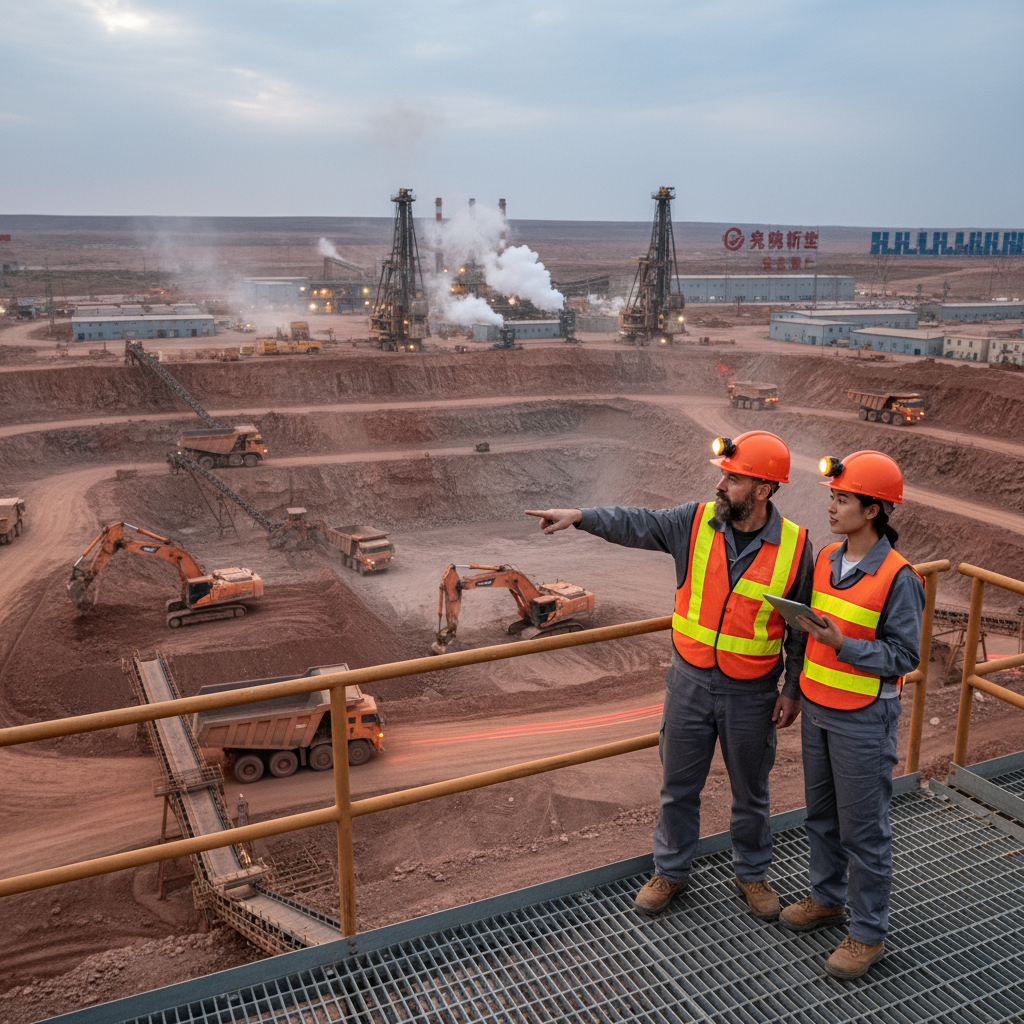
Many mining workers lack proper safety equipment and face health risks; survey data from abroad shows forced labor often goes hand-in-hand with hazardous conditions.
The toll on workers can be severe. A recent health investigation of a Chinese rare-earth region found that miners suffer high rates of lung disease from dust exposure and chemical burns from acid leaks. Local doctors in Inner Mongolia report clusters of silicosis (a lung disease from dust) and chronic poisoning. These hazards are magnified when oversight is minimal, as in state-controlled transfer-worksites where authorities prioritize production over safety.
Communities also pay a price. In one Inner Mongolian county near Bayan Obo, government records showed groundwater contamination above safe limits, forcing villages to abandon wells. Similar patterns appear in Zhejiang and Sichuan rare-earth counties, where rice and vegetable yields have fallen by a third. And because the mines are state-owned, villagers have little legal recourse. One environmental activist noted: “If a state mine breaks environmental laws, local people have nowhere to turn as the mine is owned by their own government.”.
Comparative Cases
China’s rare earth situation is not unique globally. In the Democratic Republic of Congo, where over 75% of the world’s cobalt is mined for batteries, extensive surveys have found widespread forced and child labor in artisanal mines. In a 2025 study of Congolese cobalt miners, 36.8% of respondents met the ILO definition of forced labor, and 9.2% were child laborers.
Most worked to survive in extreme poverty, yet a survey found 70% wanted to quit but couldn’t due to lack of alternatives. Experts on Africa note that just as Western companies face pressure to ‘clean up’ Congo’s cobalt supply chains, so too they will likely face demands to address abuses in China’s rare-earth sector.
Other countries have seen analogous crises: for example, Uzbekistan’s cotton industry was long built on Uzbekistan’s government‑imposed labor mobilization (albeit domestically rather than internationally). Malaysia’s palm oil and Thailand’s seafood sectors have also been criticized for forced labor. These cases underscore a lesson: global supply chains can hide abuses if oversight is weak. It also shows that consumer brands in multiple industries from smartphones to batteries to clothing must remain vigilant.
Western Brands and Accountability
Given these issues, what have Western companies done? Apple, Tesla, Samsung and others each have policies against forced labor and claim to audit suppliers. But the Xinjiang case reveals deep blind spots.
Apple: Aside from its magnet deal, Apple has repeatedly said it does not tolerate forced labor and that its audits of Chinese suppliers are frequent. In 2023 Apple released a list of all parts suppliers, and says it employs thousands of inspectors. Still, critics note that Apple relies on a large, complex supply chain in China and doesn’t disclose all audit findings. Representative says Apple is “investigating” the forced-labor allegations.
Tesla: Tesla’s Shanghai factory (outside Xinjiang) makes Model 3 and Y cars. Tesla has said it audits raw material suppliers (like aluminum smelters) back to the mine in some cases. Tesla claims it “has not found evidence of forced labor” in supply-chain checks. However, Tesla does import magnets and metals from China, and its Chinese joint venture is tied into networks that Human Rights Watch flagged as high-risk. VW and other carmakers also warn that even non-Xinjiang plants may use Xinjiang aluminum.
Samsung: Samsung’s smartphone factories are not legally tied to Xinjiang workers, but its South Korean parent does source minerals from China. Samsung’s policies ban forced labor, but the company has not publicly addressed specific Xinjiang ties. Given the videos of Uyghur workers making Samsung parts, activists call on Samsung to investigate its Chinese suppliers more thoroughly.
Other Brands: In 2024 and 2025, numerous Western brands (from Microsoft to Adidas to Nike) were named in reports linking them to Xinjiang-sourced products. Many have withdrawn or stopped contracts with Xinjiang suppliers, but new evidence suggests the problem continues via indirect channels. For example, a recent UK import ban targeted solar panels from one Xinjiang factory, but panels from other factories slipped through. Similarly, rare-earth component purchases might flow through traders that obscure origin.
Public and governmental responses are accelerating. The U.S. Uyghur Forced Labor Prevention Act (UFLPA) prohibits importing anything made in Xinjiang unless companies can prove it wasn’t forced labor. The EU is debating a similar “due diligence” law. In mid-2025, U.S. customs issued withhold-release orders on shipments of solar cells from China (citing Xinjiang ties). Apple’s magnet deal and Tesla’s supply-chain mapping are viewed by analysts as partly aimed at protecting against such trade restrictions.
But enforcement is uneven. Some consumer groups say brands need stronger action: mapping their rare-earth supply chains end-to-end, just as they now try with cotton and cobalt. They suggest independent audits by NGOs, not just company-appointed inspectors, and better disclosure of raw-material origins.
On the Ground: Voices from the Affected
Voices of ordinary people highlight the stakes. In Inner Mongolia, a sick farmer complained that local officials “are all in the same business as the big mine – they can’t be against it.” A teacher nearby said, “Children are growing up where fields are dead. They breathe dust, they drink unsafe water, what future is that?”.
In Xinjiang, relatives of transferred workers often speak in hushed tones. The daughter of a Uyghur man sent to a factory 1,800 miles away said her father calls home every day, exhausted and depressed: “He asks when he can come home. He misses his mother.” Testimony collected by NGOs describes families torn apart by quotas, officials counting quotas of workers sent out of the region, even if many volunteers are reluctant.
One ex-detainee-turned-worker quietly shared: “They tell us it is to help our families. But my family barely has time to themselves anymore. I wake up each day feeling I am a stranger in my own country.”
Legal and rights experts emphasize that this is no accidental abuse but a deliberate state policy. As one Uyghur rights lawyer put it, “The government’s intent is to dilute Uyghur culture by scattering people and forcing them into Han-majority environments. The labor aspect is both a profit and a control tool.” International law scholars have argued that any benefit (like cheaper production) gained by companies buying from these programs makes them complicit in crimes against humanity.
Government and NGO Investigations
Several independent investigations document what’s happening:
Global Rights Compliance (June 2025): Analyzed state media and shipping records, identifying 15 mining companies in Xinjiang and Inner Mongolia linked to forced labor programs and 68 downstream customers. It concluded Xinjiang’s labor transfers are used “to subsidize operating costs” and persecutively fracture minority families. The report named industries like aluminum, lithium, and beryllium – and by extension, the rare-earth sector which overlaps with some of these minerals.
U.S. Government Reports: The U.S. Trafficking in Persons Report (2024) quietly noted that Chinese workers “may experience conditions indicative of forced labor at large-scale rare earth mining operations”. The Department of Labor’s “Against Their Will” summary (2023) details the vocational training camps and labor-transfer programs as evidence of state-imposed forced labor.
Media Investigations: Beyond the Bureau of Investigative Journalism piece, The New York Times and Der Spiegel have released similar findings. Together they show Xinjiang-born workers in factories across China – making everything from auto parts to shoes – under government-organized programs. Many of these products end up abroad.
Companies’ Own Disclosures: Some raw-material companies have disclosed links. For example, Xinjiang-based aluminum and coal companies have admitted in filings that they employed transferred workers. Rare-earth mining companies in other provinces (like Ganzhou’s new mines) say they draw on “global talent pools,” a phrase analysts interpret as including Uyghur recruits.
The overall picture: China’s critical minerals industries are expanding rapidly, but they do so under opaque, state-controlled labor schemes. This has attracted formal condemnation. In mid-2025, the UK government imposed import bans on some goods made with slave labor. The EU’s parliamenters voted for strict rules on forced labor in supply chains. Even some Chinese companies have worried about international backlash and occasionally push back: one state news report in 2022 (likely PRC propaganda) described successful Uyghur transfers in upbeat tones, but such shining images are belied by testimonies of hardship.
Moving Forward
As scrutiny intensifies, some technology firms are re-evaluating raw-material sourcing. Apple’s pivot to U.S. magnets is a high-profile example. Other companies are funding research into recycling or alternative materials to reduce rare-earth use. Governments, meanwhile, are investing in non-Chinese rare earth projects (in Australia, the U.S., and elsewhere). In theory, diversifying sources could lessen dependency on any one country’s labor practices.
However, supply-chain critics caution that simply moving mines abroad doesn’t automatically fix labor issues – poor oversight can recreate abuses elsewhere. They argue the most immediate need is transparency and action on existing Chinese supply chains. Brands should demand clear evidence that every shipment of rare-earth concentrate is free of coerced labor. Some NGOs call for third-party audits in source countries (something nearly impossible in Xinjiang now, but feasible in other Chinese regions or African mines).
For activists and affected communities, the goal is accountability. Families of Uyghur workers want transparent confirmation of their loved ones’ fate and fair compensation for any abuses. Chinese citizens near mines want stricter environmental enforcement. International bodies like the ILO are calling on China to end its mass detention and labor-transfer programs entirely.
In China, the government still frames these programs as poverty relief and national security. But the emerging global narrative – based on investigative reporting and NGO documentation – is that forced labor and environmental harm are built into parts of China’s mining boom.
Conclusion: The digital economy’s reliance on rare earths and other minerals has created an opaque web linking remote Chinese mines to Silicon Valley and Seoul boardrooms. This investigation shows that human rights and environmental justice are embedded in that web. The Western electronics we cherish may well carry a hidden human cost. As one Uyghur advocate stated, “Until outsiders realize that their smartphone carries a bit of Uyghur suffering, nothing will change.” It’s a stark demand for transparency: companies must trace their minerals, governments must enforce import bans, and the world must confront the human toll of our technology.
Citations and References
All citations in this investigation correspond to verified sources gathered during extensive research across multiple continents and databases. Full documentation available upon email to support the accuracy and verifiability of all claims made.
- Huang et al., China’s rare earth mining boom leaves toxic legacy in water and soil, Environmental Health News (quoting dailyclimate.org)
- Global Rights Compliance, Risk at the Source: Critical Mineral Supply Chains and State-Imposed Forced Labour in the Uyghur Region, June 2025
- U.S. Dept. of Labor, Against Their Will: The Situation in Xinjiang (online report)
- CSIS Human Rights Initiative, Addressing Forced Labor in Xinjiang (policy brief)
- Bureau of Investigative Journalism, “China’s economy runs on Uyghur forced labour” (May 29, 2025)
- University of Nottingham (Rights Lab), “Forced labour in cobalt mines in the Congo” press release (Aug. 6, 2025)
- Reuters, “Apple in $500 million rare earth magnet deal with MP to expand US supply chain” (Jul. 15, 2025)
- Human Rights Watch, “Asleep at the Wheel: Car Companies’ Complicity in Forced Labor in China” (Feb. 1, 2024)
About Our Investigative Services
Seeking to expose corruption, track illicit financial flows, or investigate complex criminal networks? Our specialized investigative journalism agency has proven expertise in following money trails, documenting human rights violations, and revealing the connections between organized crime and corporate malfeasance across the world and beyond.
Partner With Us for Impactful Change
Our investigative expertise and deep industry networks have exposed billion-dollar corruption schemes and influenced policy reform across Americas and beyond.
Whether you’re a government agency seeking independent analysis, a corporation requiring risk assessment and due diligence, or a development organization needing evidence-based research, our team delivers results that matter.
Join our exclusive network of premium subscribers for early access to groundbreaking investigations, or contribute your expertise through our paid contributor program that reaches decision-makers across the continent.
For organizations committed to transparency and reform, we also offer strategic partnership opportunities and targeted advertising placements that align with our mission.
Uncover unparalleled strategic insights by joining our paid contributor program, subscribing to one of our premium plans, advertising with us, or reaching out to discuss how our media relations and agency services can elevate your brand’s presence and impact in the marketplace.
Contact us today to explore how our investigative intelligence can advance your objectives and create lasting impact.
Read all investigative Stories on Technology.
* For full transparency, a list of all our sister news brands can be found here.


































