

The colonial-era looting of African cultural treasures has spawned a modern multi billion-dollar black market. From Benin Bronzes felled by British troops in 1897 to Egyptian mummies smuggled through airports today, thieves and smugglers exploit weak enforcement to sell Africa’s heritage abroad and the routes to Illicit African Artifacts Trafficking.
In recent years, scholars and governments have flagged this crisis: UNESCO warns that cultural theft is a “lucrative global scourge” often tied to organized crime and terrorism. African museums and communities now launch urgent campaigns to track and reclaim artifacts, but the illicit networks are deeply entrenched.
African officials report staggering losses. Experts estimate that “more than 90 per cent of sub-Saharan artistic heritage is currently housed outside the continent”, the legacy of colonial conquests and years of unregulated export.
The British Museum alone holds over 69,000 African objects. Raphael Chikukwa, director of Zimbabwe’s National Gallery, notes, “Cultural rights are human rights, too… western countries are denying us those”, demanding overdue restitution. This long shadow of colonial appropriation has only been amplified by modern looting and a global appetite for “primitive” art.

Colonial Plunder: The Roots of the Crisis
Africa’s cultural plunder began during the “Scramble for Africa.” In 1897 the British sacked Benin City (in modern Nigeria), razing the Oba’s palace and seizing thousands of bronze plaques and ivory carvings now scattered across Europe. “[Western museums] account for more than half a million objects,” notes one analysis.
Germany has admitted to collecting over a thousand Benin Bronzes. Belgium’s notorious AfricaMuseum in Tervuren still holds 120,000 items from its Congo colony. In Ethiopia, British forces looted treasures at Magdala in 1868 (the “Maqdala campaign”), including imperial crowns, crosses and church tabots. Egypt lost countless relics during Napoleon’s 1798 invasion and subsequent colonial interest.
The cumulative toll is breathtaking: experts say “more than 90% of sub-Saharan artistic heritage” lies off the continent. African countries have repeatedly demanded repatriation, first time formally in 1972 but Western governments resisted. A UN study notes that by the mid-20th century, colonial powers were “denying us [Africans] the right to see our history”. This neglect created fertile ground for private collectors, auction houses and even terrorist groups to harvest new relics.
Modern Black Market: How Looted Artifacts Circulate
Looting never really stopped. Unrest and poverty in Africa provide ongoing opportunities. After Egypt’s 2011 uprising, Ahmed Sharaf of Egypt’s antiquities ministry lamented that “the sale of stolen antiquities has flourished – inside Egypt and abroad”. Militias in Mali and Nigeria (like Boko Haram) have dug up tombs; footage shows traffickers advertising finds like consumer goods.
The COVID era shift to online auctions has expanded buyers’ reach. The UN warns of fake UNESCO stamps being attached to artifacts in scams that have defrauded buyers of over €1 million.
US authorities regularly intercept smuggled African art. In a high-profile 2025 case, a former doctor, Ashraf Eldarir, was caught at JFK Airport with 590 freshly-bagged Egyptian objects consting gold amulets and wooden funerary figurines and literally still wet with dirt. Prosecutors described him as a “longtime trafficker” whose operation was supplied by diggers sending video “catalogues” from grave-sites.
In another recent sting, U.S. Customs seized a limestone statue of a Saqqara priest worth $6 million, hidden under the label “garden statue”. These incidents underscore how lucrative the trade is. As a U.S. attorney put it, authorities are “committed to combating the black-market sale of cultural property and the smuggling of ancient artifacts”.
Internally, many African states lack strict controls. OCCRP reports that under Nigeria’s military regimes in the 1980s-90s, 24 museums were ransacked and 382 artifacts looted, creating a culture of impunity. Weak laws and poor museum security continued to entice thieves.
A 2012 Nigerian study cited by OCCRP noted smugglers “find it easy to gain access to Nigerian cultural antiquities by capitalizing on shoddy security”. Indeed, Nigeria’s famed Nok terracottas and Ife bronze heads are prized by collectors as illicit Figured Bazaar videos occasionally surface. French customs even tipped off U.S. agents about dozens of Nok heads seized in transit to New York, leading to repatriation. Nigerian officials hope new import bans will dry up demand.
Nigeria: Colonizers & Criminals Loot the Benin Kingdom
Nigeria’s story exemplifies both colonial theft and modern trafficking. The 1897 sacking of Benin City by British troops remains trauma: thousands of bronze plaques and ivory tusks were scattered worldwide. Long denied, these artifacts are now at the center of Nigeria’s restitution campaign. The federal and Edo state governments have negotiated with museums globally, even exploring loans. In 2018, Edo’s governor Godwin Obaseki said Nigeria would consider “whatever terms we can agree to have them back”, even temporary loans.
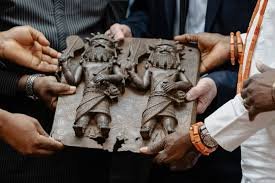
Recently Nigeria has scored breakthroughs. In February 2025, Germany handed over 1,100 Benin Bronzes to Nigeriao. In June 2025 the Netherlands transferred 119 bronzes in the largest single return to date. The Nigerian Oba (king) Ewuare II hailed this as a “divine intervention”.
A week later, Boston’s Museum of Fine Arts ceremonially returned two other bronzes – a terracotta royal head and a bronze relief – directly to the Oba. MFA Director Matthew Teitelbaum called it “deeply gratifying to see them returned to their rightful owner”. These gestures, while symbolic, signal a wider momentum.
Nigeria also uses legal tools abroad. In 2022 the U.S. and Nigeria signed a Cultural Property Agreement enabling import restrictions and asset forfeiture on stolen Nigerian art. Nigeria’s information minister proclaimed optimism: restricting markets abroad will “reduce the pillage of our irreplaceable archaeological and ethnological materials”.
Nigerian courts and Interpol are working with countries like Italy on specific cases. For example, Italy has agreed to return an Asante royal sword and Ghanaian regalia looted during colonial skirmishes. Yet challenges remain: auction houses still list Ife bronzes or Benin plaques, often under shady provenance. Grassroots activists note Nigeria’s recovery is only “a drop in the ocean” given how many treasures remain overseas.
Egypt: Civil Unrest Fuels New Plunder
Egypt’s ancient civilization has been pillaged from antiquity to today. Modern theft spiked during recent turmoil. During the 2011 uprising and subsequent chaos, Cairo saw multiple museum break-ins and tomb robberies. Archaeologists estimate no one knows how many artefacts vanished, since “they were excavated by criminal gangs, not by specialists,” resulting in unrecorded losses.
Officials managed to recover about 1,400 items by 2014, but Musem head Ahmed Sharaf warned: “the sale of stolen antiquities has flourished – inside Egypt and abroad”. Huge Islamic artifacts (like mosque doors) and even medieval minbar (pulpits) have turned up in Western auction houses.
Egyptian authorities now use both law enforcement and diplomacy. Domestic police periodically bust smuggling rings (seizing troves of figurines, amulets etc). Abroad, they pressure Western countries. In 2021 Egypt successfully lobbied the UK to return 13 items looted from Magdala in 1868 – among them a crucifixion triptych and processional cross. These were taken by British troops and only surfaced at a London auction a year prior. Ethiopia hailed this as “the first time in history” such a bulk return was achieved.
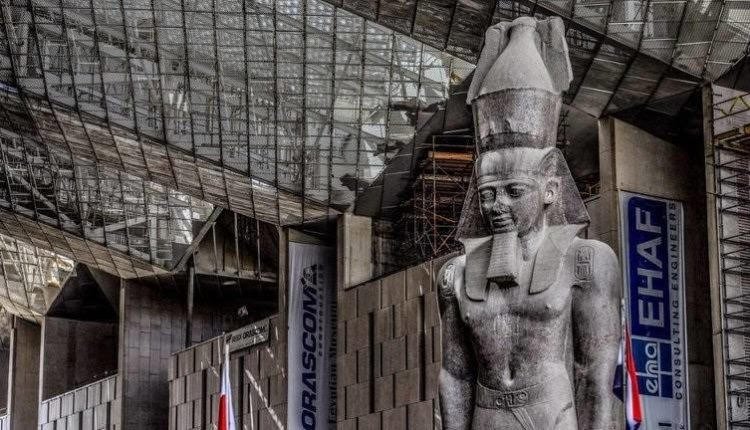
In April 2024 Egypt claimed another victory: a 3,400-year-old statue head of Ramses II was returned after being spotted in a London gallery and transferred via Switzerland. Authorities noted the head had likely been taken in the late 1980s.
Shaaban Abdel Gawad of Egypt’s antiquities repatriation office described it as part of a set with deities – and emphasized that “international agreements and the efforts of our ministries” made the recovery possible. Meanwhile, U.S. courts have also helped: a 2025 Maryland forfeiture case voided multiple smuggled Egyptian artifacts (a statue, tomb models, vases) after intercepting them at US airports.
Still, many objects are displaced. Antiquities dealer networks (often via Dubai, as one New York trial revealed) continue moving dozens of items across borders. Egypt’s government now maintains official “lost treasures” lists and coordinates with Interpol.
They have pressed Switzerland to hand over 3,400-year-old statue fragments and years of archaeological finds. Enforcement has stepped up: in one 2024 operation Egyptian police seized over 1,500 illegally excavated artifacts from looters and even dismantled a tomb built into the Pyramids Plateau (Reuters reported on that haul).
Ethiopia: From Maqdala to Modern Repatriation
Ethiopia’s case ties colonial legacy to modern diplomacy. In 1868, British forces looted Emperor Tewodros II’s castle at Maqdala, seizing dozens of treasures like crowns, crosses, and the Ark replicas (tabots) used in Ethiopian Orthodox churches.
For over 150 years, these items sat in UK collections. Only recently have they begun returning. In late 2021 Reuters reported that “the largest act of restitution in Ethiopia’s history” was underway when British sources repatriated 13 artifacts from Maqdala, including a latticed cross and crucifixion panel.
Tourism Minister Nasise Challa framed it as recovering “fingerprints of indigenous knowledge” looted by war. Ethiopian Ambassador Teferi Meles immediately commenced talks for further returns, targeting 12 sacred tabots still held abroad.
Domestically, Ethiopia has ramped up documentation and police efforts against illicit sales. Its prime minister’s special envoy, Lemma Megersa, has secured international backing for lists of stolen items. In 2024-25, Italy returned “Tsehay,” the country’s first biplane (stolen by Mussolini during WWII), and handed back military regalia of late Emperor Haile Selassie, including ceremonial swords and orders.
France and Germany have also agreed to send some Maqdala pieces. The private sector aids efforts: the Scheherazade Foundation legally acquired and donated more looted items to the Ethiopian embassy.

Despite goodwill gestures, challenges persist. Ethiopia must balance international negotiation with domestic pressures. Some officials cautiously embraced museum loans (as Nigeria did with Benin artifacts), while others, like Egypt, insist on unconditional returns.
But success in Ethiopia by bridging wills between governments and church authorities shows how concerted tracking, and sometimes serendipity, can yield results. Observers credit a UNESCO framework: Ethiopia compiled a detailed “list of plundered items” and sought global help, an approach now shared by several African states.
Across Africa: Repatriation Efforts and Comparative Cases
Similar struggles unfold continent-wide. Ghana’s Asante kingdom, for example, has worked with U.S. and Dutch museums to retrieve gold stools and swords taken in colonial wars. (A U.S. case saw 7 Asante regalia objects returned in 2021.) Cameroon and Benin are pursuing artworks held in European private collections. Even beyond Africa, restive regions see returns: Colombia has reclaimed treasures looted by narco-traffickers and Spain is reviewing Pre-Columbian collections.
Cambodia offers a telling parallel. Khmer temples were systematically looted in the late 20th century. Last year a Cambodian restitution team identified over 100 Khmer statues sitting in Australian galleries. Coordinated missions and museum goodwill have led to returns: in 2023 Australia handed back nine Cambodian bronzes after evidence proved they were stolen. Cambodia’s case underscores common themes: incomplete records, multination dealers, but also successful recovery via diplomatic pressure. It validates a broader insight: “It’s a global treasure hunt” for lost heritage.
Internationally, policy is evolving. In 2018 France agreed (via the Sarr-Savoy report) to begin repatriating items from its colonies; that led to returning 26 artworks to Benin and Senegal. In 2020 Germany adopted a colonial-era code of ethics and has committed major returns, including dozens of Benin bronzes.
UNESCO’s 1970 convention and the 1995 UNIDROIT treaty now provide frameworks, but enforcement relies on political will. Advocates caution that this is just the beginning. As one repatriation expert notes, current returns tackle the “most clear-cut cases,” but “the more difficult cases will emerge in the coming years when… ownership and questions of whether it was loot or not will be on the table.”
Voices from the Frontline: Experts and Advocates
Elders and officials argue the urgency is moral and practical. Edo community leaders say each returned Benin bronze is a part of their identity reclaimed. Obi Of Benin (Ewuare II) and Edo-state officials have lobbied tirelessly, reflecting public pressure that “the essence of who we are” lies in these artifacts. In Nigeria, Minister Lai Mohammed emphasizes legal cooperation: “We are optimistic that [international agreements] will reduce the pillage of our irreplaceable materials”.
Legal scholars underscore a human-rights angle. Zimbabwe’s Chikukwa compares museums’ hoards to stolen bicycles in desperate neighborhoods: if our ancestors made them, “we are good enough to look after them too.”. And UNESCO’s leadership has taken a hard line: Director-General Azoulay calls cultural theft a scourge fueling violence, reminding the world that “illicit trafficking in cultural property is a worldwide, lucrative scourge… not only rife in Africa”.
Victims’ voices are rarer to find, but some displaced artifacts speak for them. Each recovered object often comes with a story: a cross looted from a Lalibela church, an Asante gold stool symbolizing national unity, a Nok terracotta echoing ancient rites. Restitution ceremonies and interviews with elders reveal relief and resolve: members of the Cambia district in Ethiopia, for instance, celebrated the return of Tewodros II’s royal mantle as “restoring the dignity of our history.” In academia, figures like Nigerian archaeologist Ekpo Eyo who once outbid collectors to buy back looted art are cited as pioneers of the movement.
Combating the Trade: Laws, Technology & Cooperation
Governments are strengthening defenses. Dozens of countries have now passed laws implementing UNESCO’s 1970 Convention (against illicit export) and UNIDROIT rules (addressing ownership disputes). Interpol and customs agencies collaborate internationally; one report notes over 80 training programs in Africa to spot fakes and enforce regulations. Auction houses and museums increasingly require provenance checks. The British Museum, for example, tightened its policy after discovering items of dubious origin.
Technology helps too. Digital databases now catalog known stolen artifacts, and artificial intelligence is used to match online auction listings with museum inventories. Satellite imagery and forensic chemistry can pinpoint illegal digs and verify artifact ages. Social media investigators occasionally expose dealers. Yet as UNESCO warns, traffickers adapt rapidly using the internet and fake documents to launder artifacts.
Conclusion: At What Cost?
Every looted artifact carries an untold cost. Beyond the dollars it fetches, the loss of an object severs a community from its heritage, its creation myth, its faith, its art. African leaders stress that these are not mere museum pieces but “fingerprints of [our] indigenous knowledge and culture”.
Even after repatriations, questions linger: Will Western museums hold onto any loaned pieces? Will African museums have the security and climate control to preserve fragile treasures? Experts agree that ultimate justice demands transparency and reciprocity: Western institutions acknowledging colonial crimes, and African nations demonstrating stewardship.
As the investigations continue, journalists and activists watch closely. The global market for antiquities is adapting to scrutiny, yet traffickers find new loopholes. One message runs clear from the voices on all sides: letting the pillaging persist is a disservice to human history. A Zimbabwean curator bluntly notes: if the ancestors could craft these masterpieces, “we are good enough to look after them”. The race is on to honor that trust before more legacies vanish.
Citations and references
All citations in this investigation correspond to verified sources gathered during extensive research across multiple continents and databases. Full documentation available upon email to support the accuracy and verifiability of all claims made.
About Our Investigative Services
Seeking to expose corruption, track illicit financial flows, or investigate complex criminal networks? Our specialized investigative journalism agency has proven expertise in following money trails, documenting human rights violations, and revealing the connections between organized crime and corporate malfeasance across Africa and beyond.
Partner With Us for Impactful Change
Ready to drive transparency and accountability in your sector?
Our investigative expertise and deep industry networks have exposed billion-dollar corruption schemes and influenced policy reform across Africa.
Whether you’re a government agency seeking independent analysis, a corporation requiring risk assessment and due diligence, or a development organization needing evidence-based research, our team delivers results that matter.
Join our exclusive network of premium subscribers for early access to groundbreaking investigations, or contribute your expertise through our paid contributor program that reaches decision-makers across the continent.
For organizations committed to transparency and reform, we also offer strategic partnership opportunities and targeted advertising placements that align with our mission.
Uncover unparalleled strategic insights by joining our paid contributor program, subscribing to one of our premium plans, advertising with us, or reaching out to discuss how our media relations and agency services can elevate your brand’s presence and impact in the marketplace.
Contact us today to explore how our investigative intelligence can advance your objectives and create lasting impact.


































