

Political repression has long been a feature of Venezuela’s ruling regimes. As one observer notes, “political repression has been a hallmark of the Chavista era,” with a sharp rise in political prisoners under Maduro. Under Hugo Chávez (1999–2013) and Nicolás Maduro (2013–present), authorities have detained opposition figures, activists, and critics in facilities notorious for torture, in an effort to silence dissent.
Human rights groups report Venezuela now holds more political prisoners than any other country in Latin America, surpassing even Cuba.
This report draws on NGO data, UN findings and eyewitness testimony to document systematic human rights violations in Venezuelan political prison system, from secret detentions and prolonged incommunicado confinement to physical and psychological torture.
Venezuela’s crackdown intensified after contested elections and mass protests. In the wake of the disputed July 2024 vote, authorities arrested thousands of demonstrators. Human Rights Watch (HRW) found that over 2,000 people were detained in the month following the election, many charged under vague “terrorism” or “incitement” laws.
Officially, government spokespersons deny political motives. Attorney General Tarek Saab told Reuters “we do not prosecute anyone… for their political opinion”. Yet advocacy groups estimate nearly 290 people were held for political reasons at the time. By early 2025 that number had soared: the Venezuelan NGO Foro Penal counted 1,196 political prisoners as of February 3, 2025, the highest tally in the region.
This surge coincided with campaigns of house-to-house raids and secret abductions. As one son of a disappeared lawyer told reporters, “hooded men approached him and he was dragged to unmarked vehicles and taken away”, never to be heard from by family for months.
Key Detention Centers and Facilities in Venezuelan Political Prison System
Venezuela’s political prisoners are held in a network of notorious facilities including many under military or intelligence control where due process is routinely flouted and torture is common.
El Helicoide (Caracas) is the most infamous. Originally designed in the 1950s as a futuristic shopping mall, Helicoide was converted into the headquarters of SEBIN (Bolivarian Intelligence Service) and a clandestine prison. The building’s spiraling ramps overlook Caracas slums, concealing the “dreadful conditions” within.

Inside Helicoide, detainees report “white torture” and complete isolation. A United Nations fact-finding report found that Helicoide even contains “torture rooms”. Three members of the human rights NGO FundaRedes endured 45 days in a 13×13-foot cell with no light or outside contact. “Their only water source was the toilet. One prisoner said, ‘the hardest thing was not having information about our family’”.
In one case, journalist Javier Tarazona and two colleagues were seized by SEBIN agents and taken to Helicoide for complaining about paramilitary violence. When I spoke to their account, Tarazona’s brother Rafael recalled the terror: “Not having news about our mom” was psychologically crippling. Tarazona himself remains detained at Helicoide under spurious charges of “terrorism and incitement”.
Another key site is Ramo Verde (Los Teques), a high-security military prison once reserved for army officers. Today Maduro’s government uses Ramo Verde to confine civilian activists and critics under military jurisdiction. Exiled student leader Leopoldo López was famously held here for years on politically motivated charges. In 2018, university professor José Alberto Marulanda was secretly abducted, tortured (hooded and kicked), and imprisoned in Ramo Verde under dubious treason charges.
Foro Penal documented Marulanda’s ordeal: “plastic bags [were] put on his head to cause choking…five times” while he was kicked and beaten. (Marulanda’s alleged crime was a romantic link to a dissident navy officer, a pretext to silence him.) Ramo Verde’s severe regimen like forced labor, beatings and solitary confinement is designed to break prisoners. “Political prisoners are often held here indefinitely, under rigid rules,” notes a human rights lawyer.
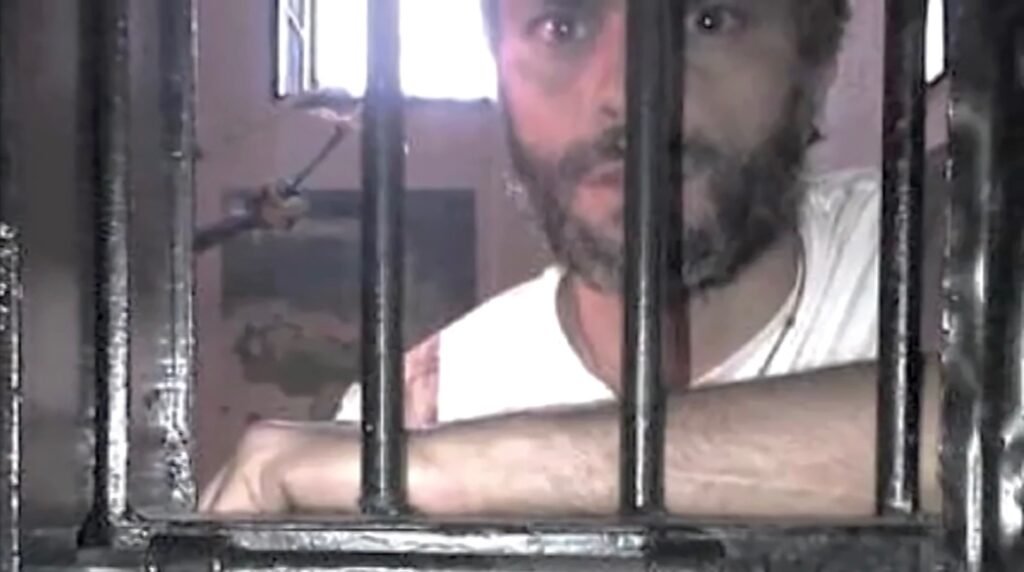
Other detention centers include SEBIN’s La Planta (Caracas) and El Rodeo/Tocuyito prisons (Miranda state). Many activists are shuffled among these sites in isolation. Foreign nationals have also been detained such as Spanish-Venezuelan journalist Sofía Sahagún Ortiz, who was arrested at the airport and transferred to Helicoide on vaguely defined terrorism charges. Throughout, families face “enforced disappearance”: the government often denies any knowledge of arrests, leaving relatives to scour jails and morgues.
Systematic Torture and Abuse
Inside these prisons, torture and ill-treatment are endemic. Former detainees describe methods aimed at inflicting maximal fear. The Nation magazine reported three FundaRedes staff were subjected to “white torture,” a form of sensory deprivation: held in darkness for weeks, without clocks or windows. One said mentally he “lost track of time and place,” and begged only to know his family’s fate. Another political prisoner recounted being shackled, humiliated, and threatened with execution. Forced solitary confinement, hunger, and the constant noise of other prisoners screaming are common.
Food and medical care are nearly nonexistent. A report by the Committee for the Freedom of Political Prisoners (CLIPPVE) documented that rations often contained insects or raw meat, causing widespread illness and severe weight loss. One worried mother wept to see her son so emaciated that she “couldn’t even recognize him” at Tocuyito prison.
In late 2024, three political inmates died under custody. CLIPPVE highlighted the case of Jesús Manuel Martínez, who was denied diabetes treatment and later died during a late-stage medical procedure. Amnesty International has denounced “grave violations” and torture of detained children. Their secretary-general Agnes Callamard declared: “Detaining, torturing, prosecuting, and punishing children crosses a line no state should ever cross”. Indeed, nearly 200 minors remain detained on protest-related charges according to Amnesty, subjected to brutality that will leave “unimaginable scars”.
These abuses fit patterns documented by UN observers. An UN fact-finding mission concluded Maduro’s tactics amount to crimes against humanity and persecution. Relatives hear only sparse news of loved ones; often just a scribbled note or the return of soiled clothing as proof a detainee is alive. Human Rights Watch warned that prolonged incommunicado detention “is a form of torture, inflicting suffering” on prisoners and families. On September 22, 2025 HRW reported dozens held without visits for months, calling the practice “a chilling testament to the brutality of repression in Venezuela”.
Lawfare and Due Process Abuses
Behind this repression is a façade of legality. Detainees are almost always charged with broadly defined “security” crimes – terrorism, treason, “incitement to hatred” – in special tribunals. According to Provea human rights group, “all the prisoners were initially charged with terrorism,” including children and teenagers. They are then tried en masse in military courts or ad hoc tribunals.
Defense rights are routinely denied: pre-trial detention often lasts months or years without formal hearings, lawyers are impeded or forced by the state, and verdicts come in back-to-back virtual sessions in which judges merely rubber-stamp charges. Families report that calls from state-appointed lawyers come daily to extract “confessions” or force admissions of guilt, under threat of violence. One freed prisoner recalled being coerced into recording a video stating his rights were respected during captivity, despite suffering beatings and choking.
The international legal community is alarmed. The International Criminal Court has an open investigation into Venezuelan abuses, and UN experts assert there are “reasonable grounds to believe” persecution on political grounds has occurred.
Venezuela’s justice system, controlled by the executive, has never independently held an officer accountable for abuses; in fact, the attorney general boasts of convictions only for low-level officers from old anti-protest cases. Meanwhile, detained opposition leaders (even recently elected lawmakers) languish in jail without trial. When the regime occasionally releases some prisoners, often in political bargaining they remain banned from speaking out or traveling, effectively silenced.
Voices of Victims and Advocates
Voices of victims and families pierce the silence. A mother wept as she described visiting her son: “He was shaky and nervous. He said, ‘When I get out, I’m going to tell you everything, but I’ll endure what I’m living because I don’t want to anger [the authorities].’”. Maritza’s words underscore the climate of fear inside prisons: “while I’m here I’m going to keep quiet and endure…”. Nicaraguan exiles liken Venezuela’s tactics to those in other autocracies.
For example, a US-brokered deal in September 2024 released 135 political prisoners from Nicaragua’s Ortega regime, many after torture following similarly broad sedition charges. As one UN report on Nicaragua documented, detainees there were “tortured through sexual abuse and electric shocks”. In Cuba, too, international monitors noted “persistent patterns of repression” in late 2024: arbitrary detentions, house arrest, forced disappearances and show trials of dissenters. These parallels highlight that Venezuela’s abuses fit a global pattern of shrinking civic space: stripping dissenters of rights and even medical care.
Legal experts in Venezuela emphasize the state’s role. Marino Alvarado of Provea observed that anti-terrorism lawshave become catch-alls: “in addition to the crime of terrorism [detainees] were charged with treason, criminal association and other crimes, but all were tried by anti-terrorism courts”. HRW’s Americas director Juanita Goebertus has called on foreign governments to intervene on behalf of “dozens” of victims held incommunicado, pressing for visits and releases.
Amnesty’s Secretary-General insisted that children’s rights must be prioritized: the organization demands “immediate and unconditional release” of all minors detained. Across Caracas and elsewhere, families hold public vigils demanding justice and contact; in April 2025 relatives released balloons outside a courthouse, calling for the freedom of imprisoned protesters.
International and Comparative Perspectives
Venezuela’s political imprisonment crisis has drawn condemnation from the UN and NGOs. The UN’s independent Fact-Finding Mission has documented hundreds of cases of arbitrary detention, torture, and ill-treatment since 2014. In 2024 it concluded the pattern of abuses could amount to crimes against humanity. U.S. and European officials have similarly criticized Maduro’s tactics.
One report notes that, in the months after a disputed election, Maduro’s regime “engaged in serious human rights abuses” including mass detentions. (In fact, appeals judges at the ICC recently rejected Venezuela’s attempt to derail the ongoing investigation into these abuses.)
Comparatively, Venezuela now ranks alongside the world’s harshest cases of repression. Amnesty notes that over 25% of Venezuelans have fled abroad due to the broader crisis of violence and abuse. In Latin America, only Cuba’s numbers of political prisoners are similar: both regimes use the label “terrorist” to criminalize dissent and have jails full of educators, journalists, and youth activists.
Human rights monitors warn that without sustained pressure, the situation will only worsen. For instance, the UN High Commissioner for Human Rights said it was “distressing” to see how Orwellian laws in Nicaragua are now being adopted elsewhere to prosecute exiles and stifle speech.
Key facts and figures:
According to Foro Penal, 1,196 people were officially classified as political prisoners in Venezuela as of Feb 2025, more than any country in Latin America. (For context, Cuba had about 1,150.)
Around 2,400 people were arrested within weeks of the 2024 elections. Human rights groups estimate nearly 290 were held for political motives by mid-2024.
Common charges include “terrorism,” “treason,” and vague “hatred” statutes, usually in expedited trials.
Multiple reports (HRW, Amnesty, UN) document detention conditions that violate international law, including enforced disappearance, torture, denial of medicine, and incommunicado confinement.
At least 198 children were detained in post-election sweeps, many held in cells with adults and subject to abuse. Experts warn this will have lifelong impacts.
Conclusion
The evidence is overwhelming: Venezuela’s political prison system is being used as a tool of repression. Under Maduro’s rule, state security forces have turned jails into dungeons for dissent. With NGOs documenting torture, sham trials, and widespread abuse across multiple facilities, observers say there are no safe guarantees for those who speak out.
As Amnesty stated, Venezuela’s government “has come to expect the worst” from authorities. The global community faces a stark choice: either tolerate these abuses or press for accountability. Human rights advocates urge international bodies (UN, ICC, OAS) to take urgent action to end the cruelty in Venezuela’s prisons. Without such pressure, the nightmare of secret prisons, forced confessions, and broken bodies will continue to spread, not just in Venezuela but as a warning to critics everywhere.
Citations And References
All citations in this investigation correspond to verified sources gathered during extensive research across multiple continents and databases. Full documentation available upon email to support the accuracy and verifiability of all claims made.
Official reports, NGO findings and eyewitness accounts were used throughout (see citations). Further verification can be found in detailed publications by Human Rights Watch, Amnesty International, Foro Penal and Provea, UN Fact-Finding Mission reports, and international news agencies and Al Jazeera.
About Our Investigative Services
Seeking to expose corruption, track illicit financial flows, or investigate complex criminal networks? Our specialized investigative journalism agency has proven expertise in following money trails, documenting human rights violations, and revealing the connections between organized crime and corporate malfeasance across Africa and beyond.
Partner With Us for Impactful Change
Ready to drive transparency and accountability in your sector?
Our investigative expertise and deep industry networks have exposed billion-dollar corruption schemes and influenced policy reform across Americas.
Whether you’re a government agency seeking independent analysis, a corporation requiring risk assessment and due diligence, or a development organization needing evidence-based research, our team delivers results that matter.
Join our exclusive network of premium subscribers for early access to groundbreaking investigations, or contribute your expertise through our paid contributor program that reaches decision-makers across the continent.
For organizations committed to transparency and reform, we also offer strategic partnership opportunities and targeted advertising placements that align with our mission.
Uncover unparalleled strategic insights by joining our paid contributor program, subscribing to one of our premium plans, advertising with us, or reaching out to discuss how our media relations and agency services can elevate your brand’s presence and impact in the marketplace.
Contact us today to explore how our investigative intelligence can advance your objectives and create lasting impact.


































